
There used to be a kabbalist on LA’s Pico Boulevard who has no idea what he started…
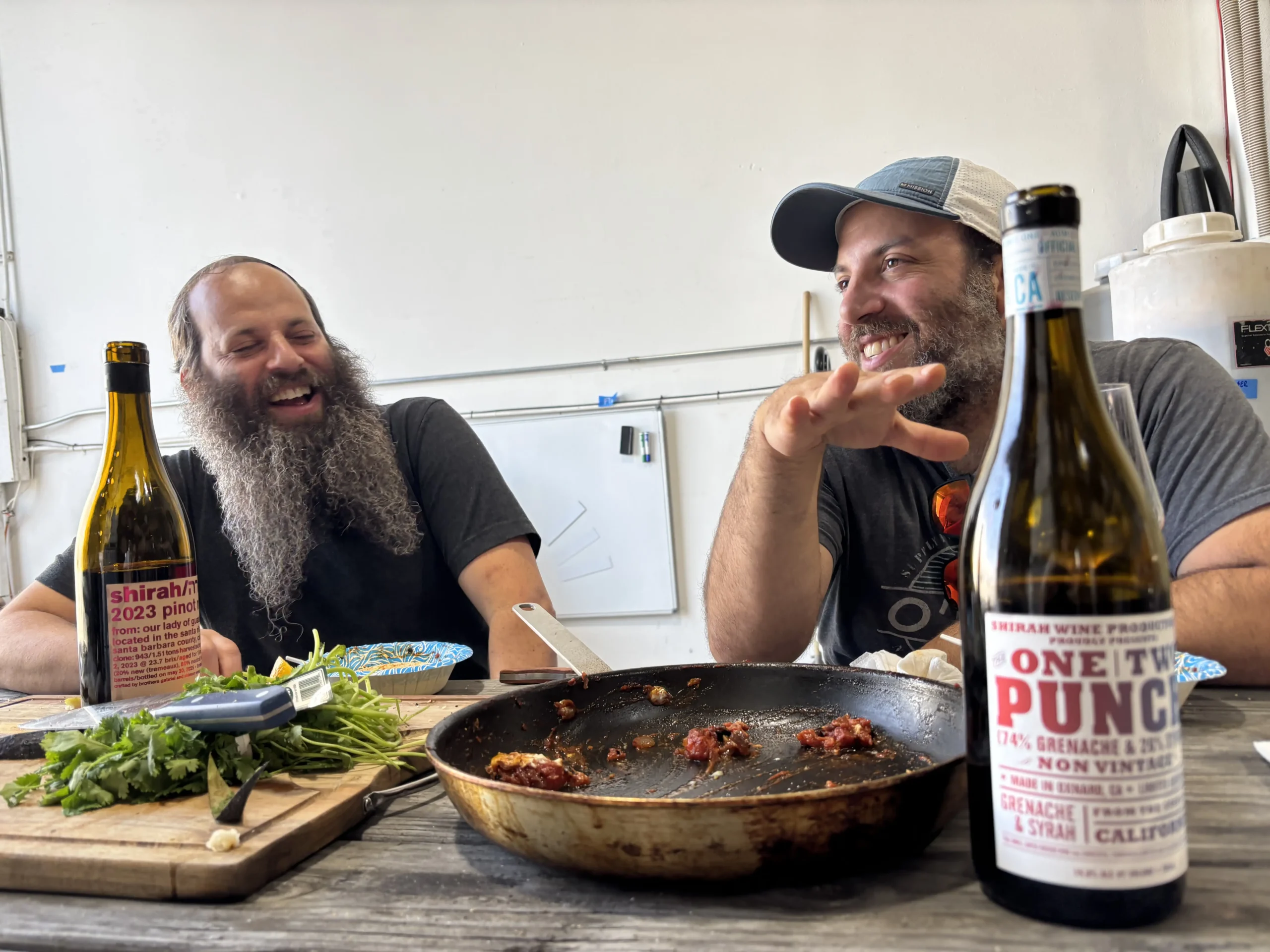
Gabriel Weiss was trying to name his first wine, a California Syrah from the 2005 vintage, and so he asked an older Orthodox man he knew for a suggestion. The man said: Shirah. It means song in Hebrew, the kind of word that carries resonance and humility at the same time, a suggestion that what you are making ought to lift something in the person who receives it. With the wine being a Syrah, it all made sense, naturally. Gabriel and his brother Shimon named the company Shirah Wine Co., put a label on a bottle, and in doing so gave the kosher wine world something it did not know it was missing: a California boutique winery built by two brothers from the East Coast, who looked at what was on the store shelves, and decided the whole thing could be done better. They were spectacularly right.
Gabriel moved to California in 2001, drawn by the wine industry, and took a job at Herzog Winery in Oxnard as a cellar rat. This is the unglamorous foundational role that involves moving wine, cleaning barrels, and learning the physical grammar of winemaking from the ground up, which is honestly the only way to actually learn it. He was not a trained enologist. He was a deep reader and a researcher, the kind of person who comes to a subject through obsession rather than credentialing, which in the wine world is sometimes a liability and sometimes the only thing that produces genuinely original results. In 2005, a vineyard he was sourcing from had Syrah left on the vines at the end of the season. The owner told him to come take what he wanted. Gabe harvested it, made a wine in a garage with friends, and bottled roughly 90 cases. He later described it, in a 2014 interview for the LA Times, as “head and shoulders better than any other kosher Syrah (he) had ever tasted.” Quite the statement! Made in someone’s garage. With leftover grapes. Let that sink in.
Shimon, three years younger, was still in New York for that first vintage. He is the practical half of the partnership, a self-taught winemaker with a cabinet maker’s hands and a cabinet maker’s instinct for structure and fit. When the brothers eventually joined forces and needed to produce their wine in a shared non-kosher facility, it was Shimon who solved the problem of how to keep the wine kosher overnight. He built tamper-proof wooden cabinets for the fermentation vessels, locked and sealed so that no non-Jewish hands could touch the wine while the brothers slept. That is the kind of ingenuity that only happens when you combine deep religious knowledge with serious carpentry skill, which is not a combination most people have, and which Shimon deploys with the matter-of-fact competence that is entirely characteristic of him.
The brothers made wine together for the first time in 2008, producing four barrels of two different wines at a cooperative non-kosher facility, sleeping in shifts to maintain kosher supervision around the clock. The 2009 vintage was the official launch of Shirah Wine Co. as a functioning business. That first year, they produced Power to the People, their flagship Syrah dressed in a sleek, black suede label, that would become the wine Shirah is arguably most associated with, and sold 300 cases at $65 a bottle. For a kosher Syrah in those days, such price and quality signals were genuinely something new. The kosher wine world had not quite seen this before.
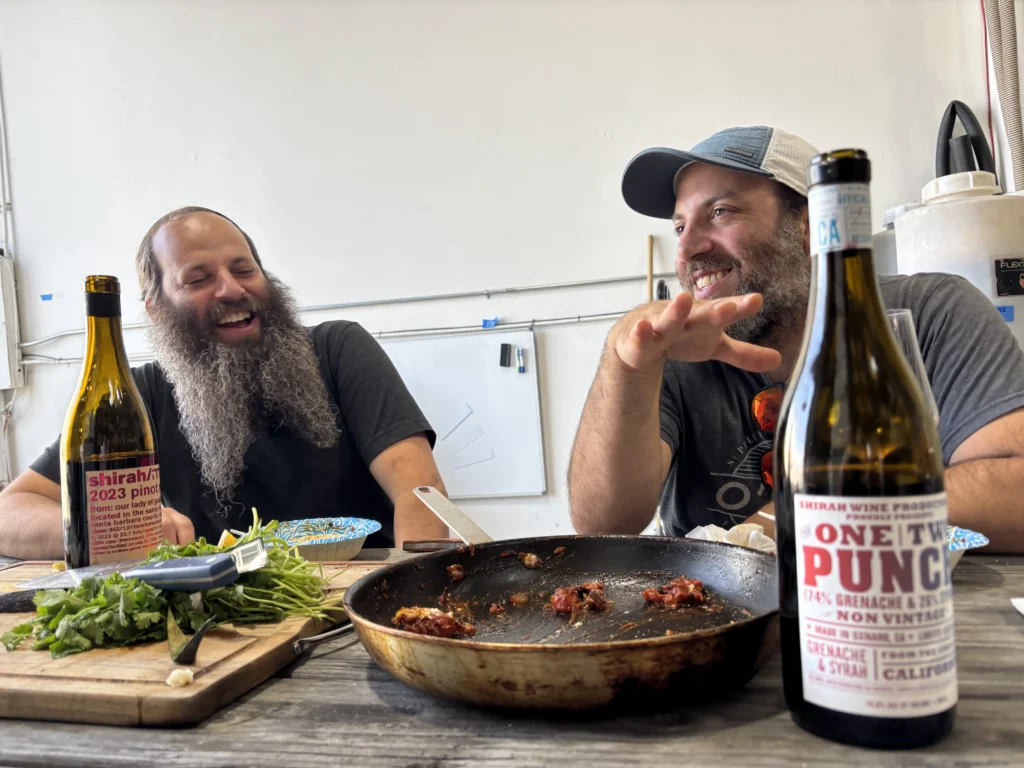
Power to the People is a Santa Barbara Syrah sourced from critically acclaimed Central Coast vineyards, primarily Thompson and Rolph in Alisos Canyon and Adelaida, co-fermented with a small percentage of Viognier, as is the Northern Rhone tradition (Gabe’s dream is to one day enjoy a kosher Hermitage, the Northern Rhône’s most prestigious appellation for varietal Syrah wines.) The Viognier is not decorative. It lifts the aromatics, introduces floral and peach notes into the inky depth of the Syrah, and keeps the wine from becoming the kind of massive extracted California red that overwhelms rather than invites. Power to the People is smoky and peppercorn-driven, with scorched earth, dark berries, leather, and tapenade, a wine with full-throttled intensity that still manages to be food-friendly. The Jewish Week named it Best Red Wine over $25. It has been Shirah’s calling card for 15 years and it has earned every year of that reputation.
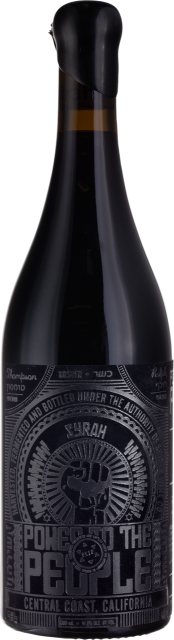
Now let’s talk about the labels, because the labels are half the story, and they do not get nearly enough credit. Gabel and Shimon both have backgrounds in product design and visual crafts, and the packaging on Shirah wines is not an afterthought. It is part of the experience, and it is genuinely excellent work. Power to the People looks like a vintage rock concert poster. The 1-2 Punch bottle carries two labels styled after vintage boxing tickets, with the neck label identifying the bout between Santa Barbara Grenache and San Luis Obispo Syrah with the mock solemnity of an actual fight program. The Coalition is designed in the style of the Declaration of Independence, complete with period penmanship and syntax, and sealed with red wax bearing the Hebrew letter shin. All of it is designed by Yael Miller, co-founder of Miller Creative and a Weiss sister, which means the visual identity of this winery is a genuine family collaboration from top to bottom.
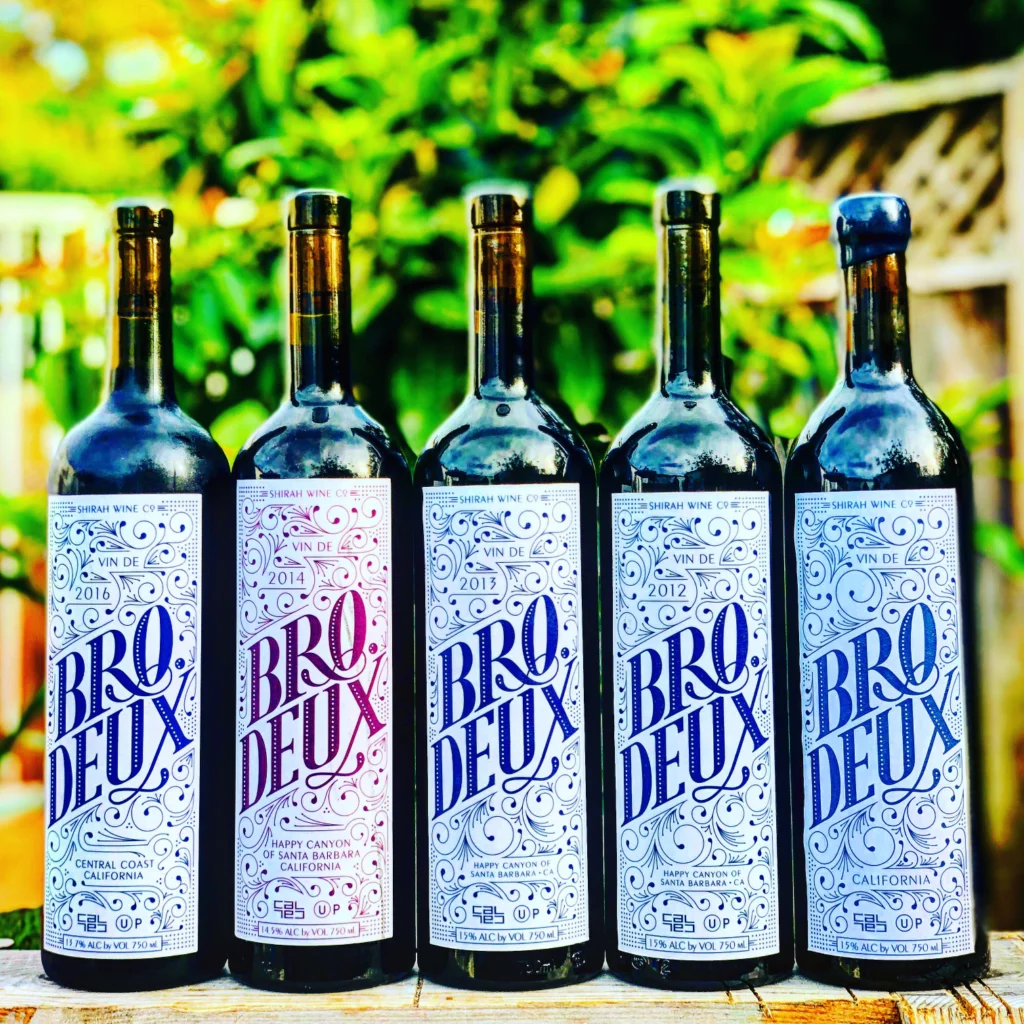
The Coalition is also the wine that best expresses Shirah’s particular brand of delightful madness, which is a madness the kosher wine world desperately needed. It is a different blend almost every vintage, built around whatever eclectic combination of grapes the brothers have decided to explore that year. Early vintages centered on Touriga Nacional, the great Portuguese grape typically found in Port, blended with Syrah and Petit Verdot. Later versions have incorporated Sangiovese, Dolcetto, Zinfandel, Merlot, Tannat, Aglianico, and Mourvedre, often from obscure California vineyards growing varieties that most kosher winemakers have never touched. The point, which Gabriel and Shimon state explicitly, is to introduce the kosher wine-drinking public to grapes and styles that exist throughout the broader wine world but have historically been nearly invisible on kosher shelves. Touriga Nacional is now used by multiple kosher producers. Shirah was among the first.
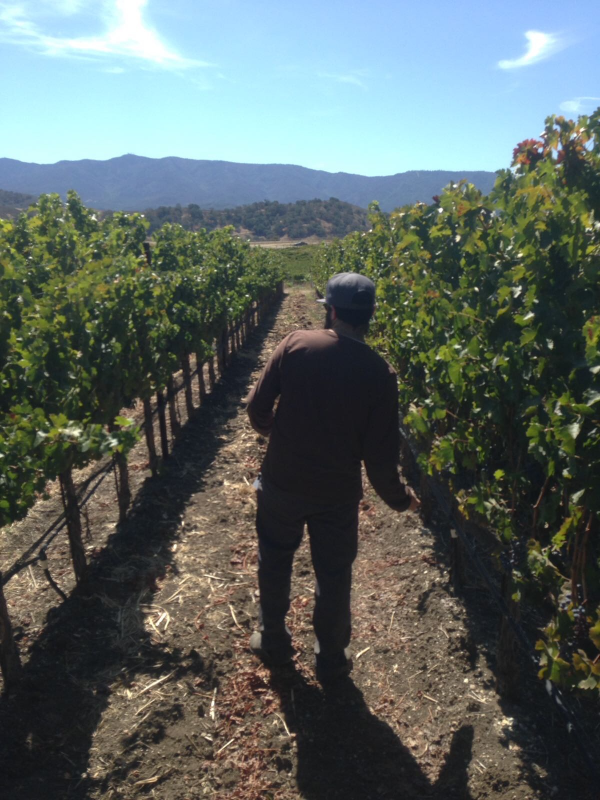
The grapes come from across the California Central Coast, primarily Santa Barbara and San Luis Obispo counties, with a particular focus on small acclaimed vineyards that also sell to serious non-kosher producers. Thompson Vineyard in Alisos Canyon, Rolph Vineyard in Adelaida, and Shokrian and Luna Matta for Mourvedre are names that carry real weight in the broader California wine conversation. The minimalist winemaking approach, small batches, high-quality sourcing, and limited intervention, comes directly from Gabe and Shimon’s conviction that the grape material is everything. You cannot make great wine from mediocre fruit. You can only make mediocre wine from great fruit if you work hard enough at ruining it.
Shirah’s whites deserve far more attention than whites typically receive. Producing high-quality white wines requires a high level of skill. The Weiss Bros have proved time and again that they got plenty of that, and then some. The Vintage Whites, a blend of Viognier and Grenache Blanc from Santa Barbara County, is the kind of wine that makes you wonder why more California kosher whites do not go in this direction: aromatic, textured, dry, with the stone-fruit generosity of Viognier balanced by the crispness of Grenache Blanc. The Riesling, when it appears in the lineup, brings green, flint-driven intensity with passion fruit and racy acidity, nothing like the soft and vaguely sweet whites that once defined American kosher wine. These are wines with opinions, which is exactly the point. Speaking of Riesling, the bros recently released two new Rieslings, in addition to their “regular” Riesling. These are experiments with oxidative and reductive winemaking. While these terms certainly trigger the attention of geeks, the result in the bottle would make anyone’s mouth water, as these geeky Rieslings are delicious!
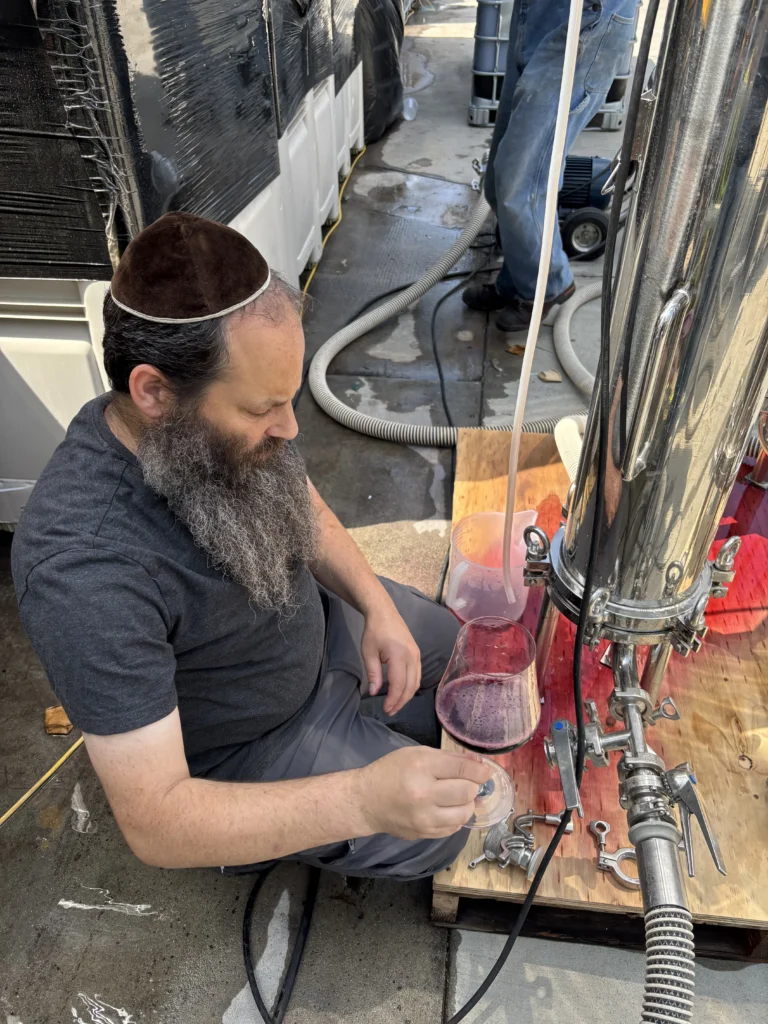
What Gabriel and Shimon Weiss built with Shirah is a proof of concept the kosher wine world is still catching up to. Making great wine does not require a Tuscanian hillside or a classified Bordeaux estate. It requires someone who knows where the best grapes grow, who understands what those grapes want to become, and who has the vision and stubbornness to make something that has not been made before. The wine is called Shirah, which means song. And the best thing about a song is that it does not ask permission to be heard.
L’chaim!
/

Photos from Our Community
See how these recipes turned out in real kitchens. Photos from home cooks will appear here as they're shared.
Tell Us What You Think
Your review could help someone decide what's for dinner tonight. Log in to join the conversation.
Log in to join the discussion0 Comments
Do you want to rate this post?
Edit your rating
Choose a new star rating and save it.
Moderation
Report
Kosher Comments
Kosher Comments
Add a link
Posting comment
Your comment will be posted in a moment...