

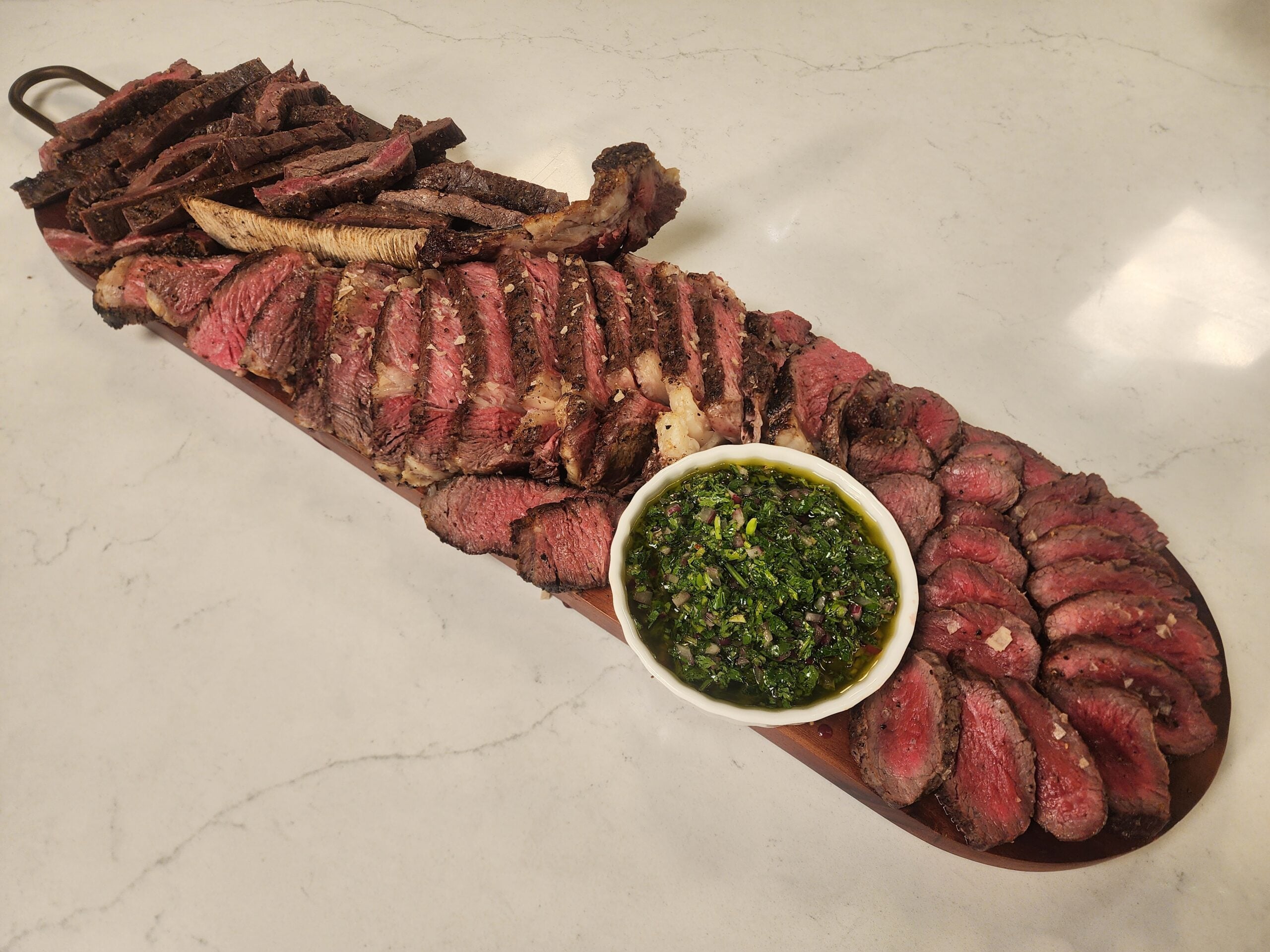
While filming a full episode all about grilling, someone told me that people think grilling is "the men's job."
Um... absolutely not.
Grilling isn't some skill you're born with. Once you understand a few simple techniques, anyone can make an incredible steak. Want the full walkthrough? Watch the episode on Easy Does It. Want the biggest takeaways? Keep reading.
Whether you're working with a backyard grill, a cast iron skillet, or even your oven's broiler, these are the tips that make all the difference:
1. Start With the Right Steak
Not every cut cooks the same.
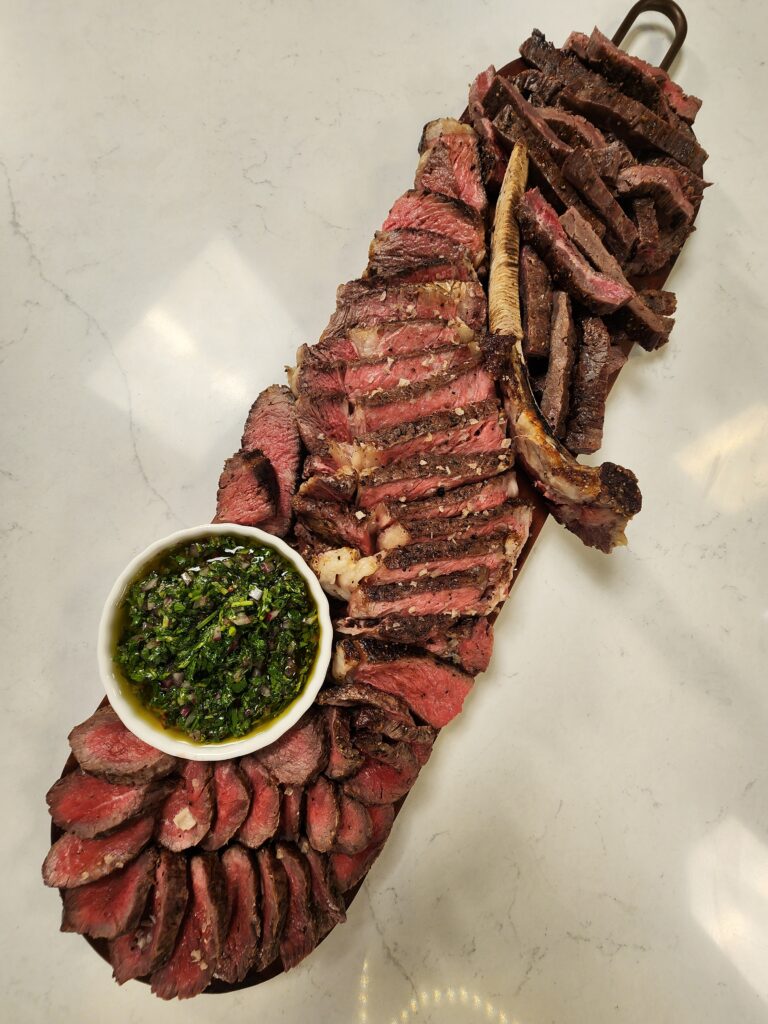
If you're looking for a real showstopper, go with a thick-cut cowboy (tomahawk) steak. Oyster steak is one of my personal favorites—it's usually more budget-friendly but still incredibly tender when cooked to medium-rare. Skirt steak delivers huge flavor, and rib steaks, Denver steaks, and New York strips are always solid choices.
One thing I never compromise on? Quality. For steaks, I like buying American beef with beautiful marbling. That fat melts into the meat as it cooks, giving you the juicy steak everyone hopes for. Imported beef works beautifully for low-and-slow cooking, but I prefer American beef for grilled steaks.
2. The Best Steak Doesn't Need a Marinade
I know this surprises people. For almost every steak I grill, I skip the marinade completely.
Instead, I season generously with kosher salt and freshly ground black pepper. Then I add flavor afterward with a fresh sauce like chimichurri. The meat should be the star.
Don't be shy with the seasoning—it should look like more salt than you think you need.
Exception: Skirt steak is naturally saltier because of the koshering process, so I usually skip the salt and season it with pepper only.
3. Two Small Steps That Make a Huge Difference
Before your steak ever touches the heat:
- Pat it completely dry. Moisture creates steam—and steam is the enemy of a beautiful crust.
- Let it sit out for about 30 minutes so it loses its refrigerator chill. A freezing cold steak cooks unevenly and won't brown as nicely.
These two steps alone dramatically improve your results.
4. Thick Steaks Need a Reverse Sear
A cowboy steak is simply too thick to throw straight onto the grill.
Instead, start it in a 275-degree-Fahrenheit oven, then finish it over very high heat. This technique is called a reverse sear, and it's one of the easiest ways to get a steak that's perfectly pink from edge to edge.
While filming, I assumed my cowboy steak would need about 40 minutes in the oven. But the thermometer showed otherwise. Every steak is different and every oven is different. That's why you should rely on a thermometer instead of the clock. Keep reading.
5. A Thermometer Is Your Secret Weapon
If you only buy one grilling tool, make it a good thermometer.
Perfect for checking the doneness of steaks on the grill, in a skillet, or under the broiler. Just insert it into the thickest part of the meat for an instant temperature reading.
This is my favorite tool for reverse-searing thick steaks. Insert the probe into the steak before it goes into the oven, and it stays there while it cooks. The wireless base displays the internal temperature in real time, so you know exactly when your steak is ready—without opening the oven or repeatedly checking it. It's the easiest way to cook a thick steak perfectly every time.
One more important thing: remember carryover cooking. Your steak keeps cooking after it comes off the heat, so pull it just before your target temperature. Those last few degrees happen while it rests.
6. No Grill? No Problem.
Don’t be surprised when I say this… A cast iron skillet actually gives an unbelievable crust. I actually preferred the crust from the cast iron version of the cowboy steak over the grilled one!
And after filming this episode, I was genuinely impressed with how well the broiler performed too. I almost never use it—but it turned out to be an excellent backup when grilling outside isn't an option.
Whether you're using an outdoor grill, a cast iron skillet, or your broiler, the key is that they all need to be really hot. Always preheat first. Don't put your steak on a grill that's still warming up—you want those grates screaming hot before the meat goes on. That beautiful brown crust everyone loves is called the Maillard reaction, and it only happens over high heat.
Watch the full episode to see how these different cooking methods compare!
7. Don't Slice Too Soon
This is one of the hardest parts. After cooking, leave the steak alone for about 10 minutes. Resting lets the juices redistribute throughout the meat instead of spilling onto your cutting board.
Then slice. For skirt steak, cut the long ribbon into 4- to -6-inch sections and then cut those against the grain. It makes a dramatic difference in tenderness.
Esty’s Favorite Way to Serve Steak
I love arranging sliced steaks on a large board with plenty of fresh chimichurri and topped with flaky smoky salt. Fan the slices out on a board so everyone can easily grab a piece.
If I'm serving it for Shabbos lunch, I simply slice everything in the morning, cover the board well so it doesn't dry out, and let it come to room temperature before serving. I don't reheat it—that just keeps cooking the meat and makes it chewy.
Once you understand these techniques, grilling stops feeling intimidating. Just try it! Once you nail your first perfectly cooked steak, you'll be looking for excuses to fire up the grill.

When leaving comments on kosher.com we ask that you be respectful, appropriate, and stay on topic. Click here to read our full comment policy.
Kosher.com Commenting Guidelines
We love hearing from our community! Constructive feedback, tips, questions, and friendly engagement are encouraged.
By commenting on Kosher.com, you agree to follow these guidelines. Please note that comments are for community discussion only and should not be considered halachic guidance—always check with your own Rabbi or LOR.
1. Be Respectful
2. Keep It Appropriate
3. Protect Privacy
4. Stay On Topic
5. Moderation
About how long do you broil the oyster steaks on high broiler?