

Welcome to the United States of California!
No, it is not the year 2041, nor has the Golden State seceded from the country. (Although ever since it was admitted to the union, California has been subjected to more than 220 proposals for secession and division into multiple states.)
Because of California’s large size, it is blessed with a full shopping cart of attractions for travelers. Had California been its own country, it would still deserve a top spot on everyone's top-ten list of countries to visit. With so many points of interest scattered across its 163,696 square miles, there are endless possibilities. Let’s hit the road to a lesser known California with five different towns off the beaten track.
1. Nevada City, California
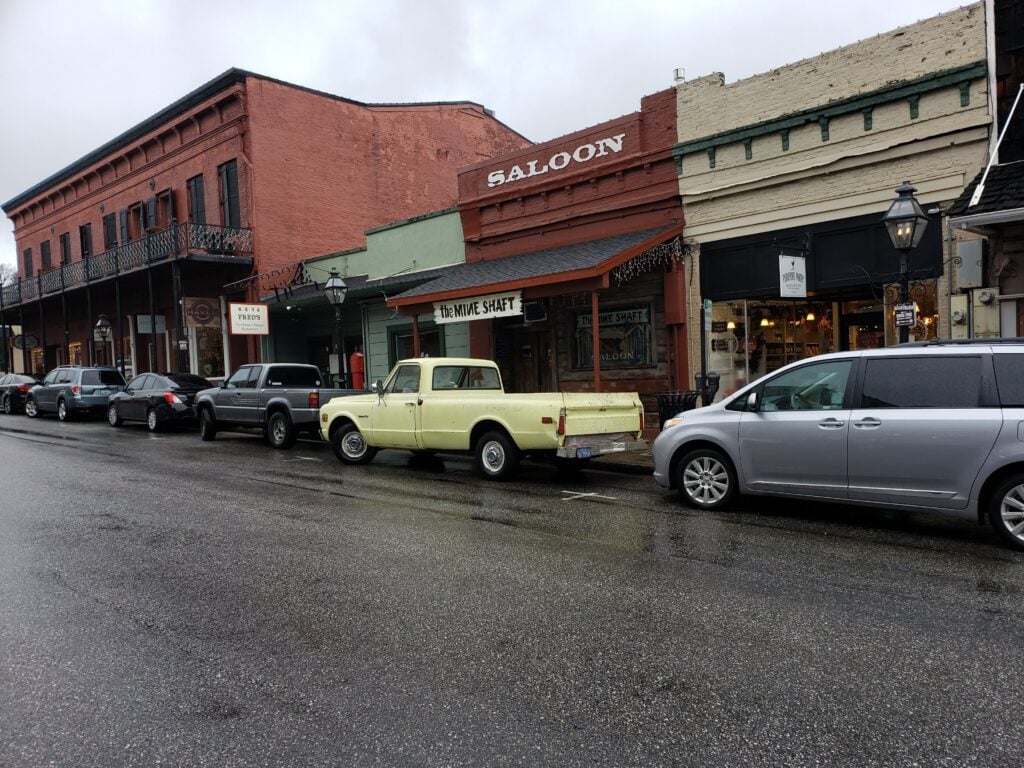
History: When thinking about the “Wild West,” the first thing that comes to mind is an old Western town with good-ole charm. There are a handful of Western towns that have survived and are now being romanticized, visited and photographed by many. Not far from the state's capital of Sacramento sits one such charming town along the western foothills of the Sierra Nevada (which literally translates to "snowy mountains" in Spanish).
The first settlers came here during the Gold Rush in the late 1840s and it feels as though not much has changed, especially in the Downtown Historic District. During the Gold Rush, Nevada City was the most important gold mining town in the entire state. Initially, the town was called “Nevada” but later the word “City” was added to its name because people would confuse it with the nearby state.
Many of the buildings in town have been preserved and received recognition from the National Register of Historic Places. Additionally, the downtown district has been categorized as a California Historical Landmark, including California's oldest existing theater and one of the oldest hotels west of the Rocky Mountains, both of which are still in use.
Broad Street: You can easily spend a full day exploring the area. Broad Street has an abundance of quaint shops housed inside old buildings, including restaurants, cafés, bars, art galleries and shops with handmade furniture, candles, gifts and jewelry. Not to mention the street smells like chocolate from a boutique chocolate shop! (Of course, in keeping with the old-fashioned theme, they are all called “shoppes.”) Even trying on the many different hats in the hat shop was fun — there was an entire wall of hats to choose from! Make sure to check out the old firehouse, which now serves as a museum and has an attractive balcony and Greek-style cornice, and take some time to explore the quiet side roads as well, where you will find old houses transformed into bed and breakfasts.
I began touring the main street from the bottom of the hill, not realizing what the view was like behind me. As I approached the top, crossed the street and turned to walk downhill, the town looked even more picturesque with the old, multi-colored buildings against the Sierra Nevada mountains. No wonder it was used as a set location for various film and television productions!
Empire Mine State Historic Park: A few miles from Broad Street is Empire Mine State Historic Park. The site was once one of California's biggest gold mines. The tracks used to hoist the gold are still visible inside the main mine shaft. On display is the “Highway to Work,” a head frame close to 100 feet tall, which supports the cable down the 4,600-foot shaft (the only way in and out of the shaft.) The journey to the bottom of the shaft took a little over seven minutes, with the hoists traveling at a speed of 600 feet per minute.
Hundreds of mine parts and artifacts are scattered across the yard. There is an actual blacksmith shop with lots of rustic old tools. The docents are very knowledgeable and give visitors a glimpse of how the mine operated. The Compressor Building houses the air pumping equipment that allowed miners to safely work deep inside the mine. The compressed air was also used to operate the drills and the hoists. Also visible in the factory are the tools and furnaces used for pouring the gold bars. Each bar weighed approximately 70 pounds and the mine averaged half an ounce of gold per ton of ore. The gold bars were then taken to the U.S. Mint in San Francisco. Considering the weight of each individual gold bar, the infamous Western Bank robbers must have been in great physique to be able to throw such heavy bars from one coach to another.
The grounds in the park are also beautiful and feature many hiking trails, serving as a meeting point between history and beauty.
2. Norco, California
History: Approximately 50 miles from Los Angeles lies a city called Norco. The city has trademarked the motto "Horse Town USA,” rightfully so, as it has one of the largest networks of horse trails in the nation. At one point, there were more horse trails than roads for cars; currently there are more horse trails than pedestrian sidewalks. Also unique are the crosswalk buttons, which are placed at two different heights — one for pedestrians and one for riders on horseback. I am about six feet tall and I had to jump to reach the button for the riders! There are even parking spots for cars next to hitching rails for horses and active rodeos, adding to the town’s Western vibe.
The people who established Norco originally wanted to make it the largest resort on the west coast. Instead, it developed into a farming community with a love for horseback riding. As a previous mayor of Norco expressed, “This is the last Mecca, the last Alamo of horse country.”
Hay & Horses: Upon entering the town, the first thing to catch our attention was a huge store selling hay. It was literally the size of a Walmart or Home Depot! The workers were moving swiftly with pallet jacks, carrying pallets of hay to customer’s trucks. Right next to it was a huge dealership lot selling horse trailers, with various types and sizes of trailers as far as the eye could see.
We came across a farrier, an expert in a horse’s hoof care. As we approached him, he was placing the legs of the horse on a special stool next to a stand of various tools. He gave me a horseshoe as a souvenir and told me that if I was planning on hanging it outside, I should place the open side towards the bottom, so that the luck would rain down on me. If, however, I was planning on hanging it inside, it should be placed with the open side towards the top, so that the luck would stay inside the house.
After a few hours in Norco, we made our way back to Los Angeles, passing yellow street signs with images of a horse and rider.
3. Rough and Ready, California
History: The town of Rough and Ready does not have much left to tour aside from a handful of remnants from the old Sierra Nevada mining town. However, just for its name itself, as well as the fact that it made it onto the list of "unusual names" and is a California Historical Landmark, I made the detour to check out this old town.
Rough and Ready was established during the Gold Rush by a Wisconsin mining company. The company was known as the "Rough and Ready Company,” named after the newly-elected 12th United States President, Zachary Taylor, who went by the nickname of "Old Rough and Ready.” The owner of the company served as a captain in the American Forces under the President, fighting the war against the Native American Black Hawk leader and his tribe. Three other towns carried this unique name, but only this one survived.
Ascending upon the town I came across a blue sign that read, "The Great Republic of Rough and Ready" (the name it carried in the 1850s when it declared its secession from the Union to avoid mining taxes). Old stagecoaches lay in front of wooden shops alongside wagons, carts, rails and tools from the mine. There is an old post office that is still in use as well as a firehouse and historic toll house. I enjoyed reading the toll price — man and horse: 25 cents.
I entered the firehouse, where the volunteers were warm and friendly. “Rough and Ready Fire Dept. Co 59” was written on all the doors of the fire trucks. I asked one of the firefighters if he was "rough and ready,” to which he replied affirmatively. One of the senior fire volunteers (originally from New York) gave me a tour of the firehouse. He showed me the trucks, including one that was 35 years old, yet it still sparkled and was in great condition. He also showed me an older truck from 1963 that was no longer in service. We discussed wildfires in the region and spoke about New York. After a while, I bid them farewell and I continued on my way.
4. Slab City, California
History: In the Sonoran Desert, approximately 85 miles from Palm Springs and a mere 40 miles from the Mexican border, sits a small squatter community of free-spirited hippies and “snowbirds” (migraters from all over the United States and Canada who move to the desert to warm up during the winter months). During the winter, close to 4,000 inhabitants live in Slab City on approximately 640 acres and only about 150 stay through the summer due to the brutality of the heat.
The residents use solar panels and generators to generate electricity, along with bed springs, tires and anything they can lay their hands on to create gates to their improvised homes. They live off-the-grid in what is known as the “only lawless city in America.”
The name “Slab City” is derived from a dismantled World War II marine base that used to train artillery and anti-aircraft units. The first settlers were veterans who had worked at the base, followed later by backpackers, drifters and RV owners in search of a free camping spot not far from Palm Springs. The residents call themselves “slabsters” and “slabbies.”
Life off-the-Grid: Throughout the years, Slab City has attracted many different folks, including hippies, artists, drug addicts and outcasts. But do not think you can “get away with murder” in the lawless city! The area is regularly patrolled by local sheriffs and Border Patrol agents searching for undocumented immigrants. The most common causes for police intervention in the area are camping boundary disputes, burglary and drug-related crimes.
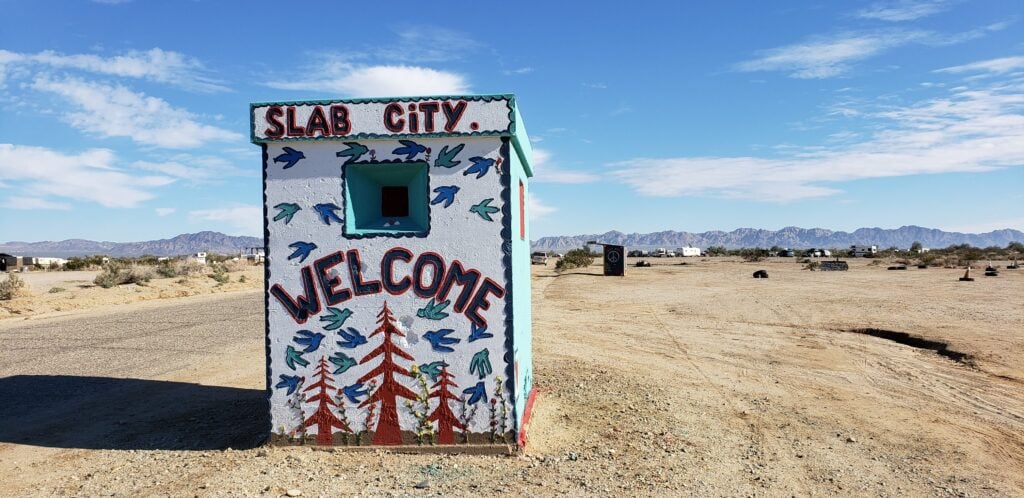
Upon entering Slab City, the first thing to catch my eye was what looked to be a bus stop, which was spray-painted a light blue color with birds and trees. In big letters it said “Slab City, Welcome.” On the horizon, I saw a few RVs spread out and a small booth spray-painted with a floral image, a large peace sign and an "I" for information. On the bottom of the booth read the words "The Last Free Place." In the far distance I spotted an old painted bus rolling down the dirt road. There was a chimney sticking out of the window (apparently there was an oven inside) and a bike tied to the roof. Meanwhile, a girl strolled past me wheeling an icebox and asked me if I wanted to buy eggs or herbs. I observed two people playing baseball with a makeshift ball and bat made from a paper bag and tree branch, respectively. A man invited me to an outdoor music venue called “The Range.” I asked what time and he responded, “There is no time here. Only light and dark.” He also mentioned that if there was anything I needed, that he was the guy to talk to. (I wasn’t sure if he was being polite or if he was hinting that he is the source for anything illegal.)
The Range: I went to The Range and enjoyed the music and atmosphere. I noticed that the gates of The Range were made from car bumpers. I stuck around for a while and watched the slabbies jamming on their different music instruments. The sun was almost setting when I realized it was time to head out to avoid driving those desert dirt roads in total darkness.
5. Solvang, California
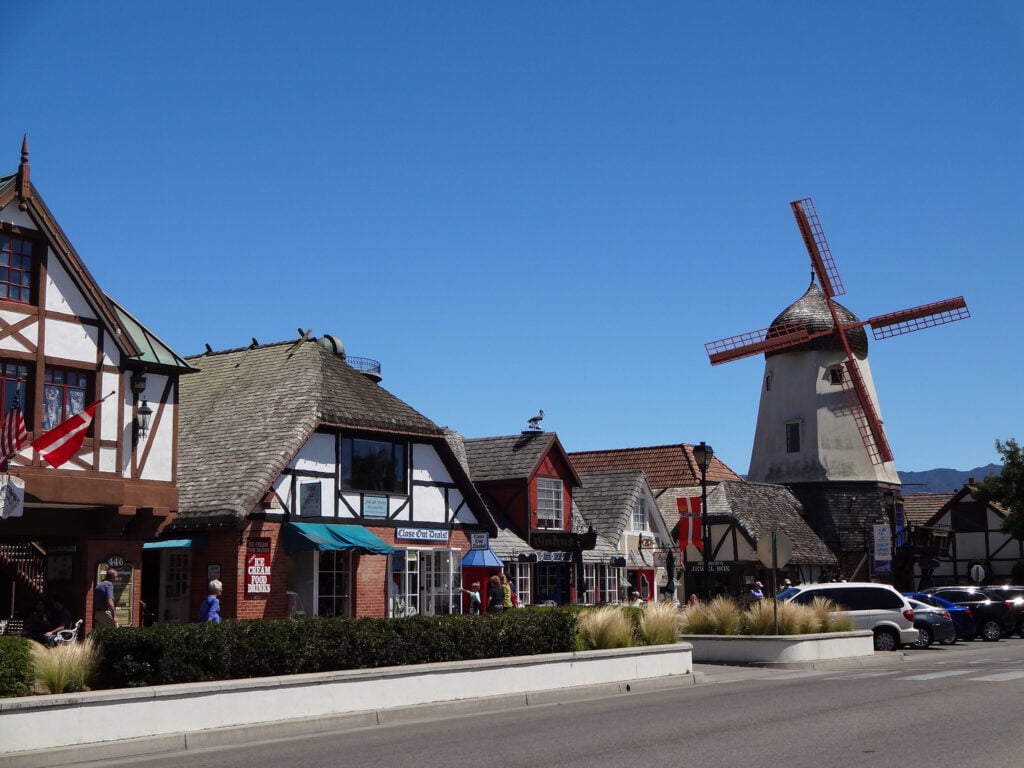
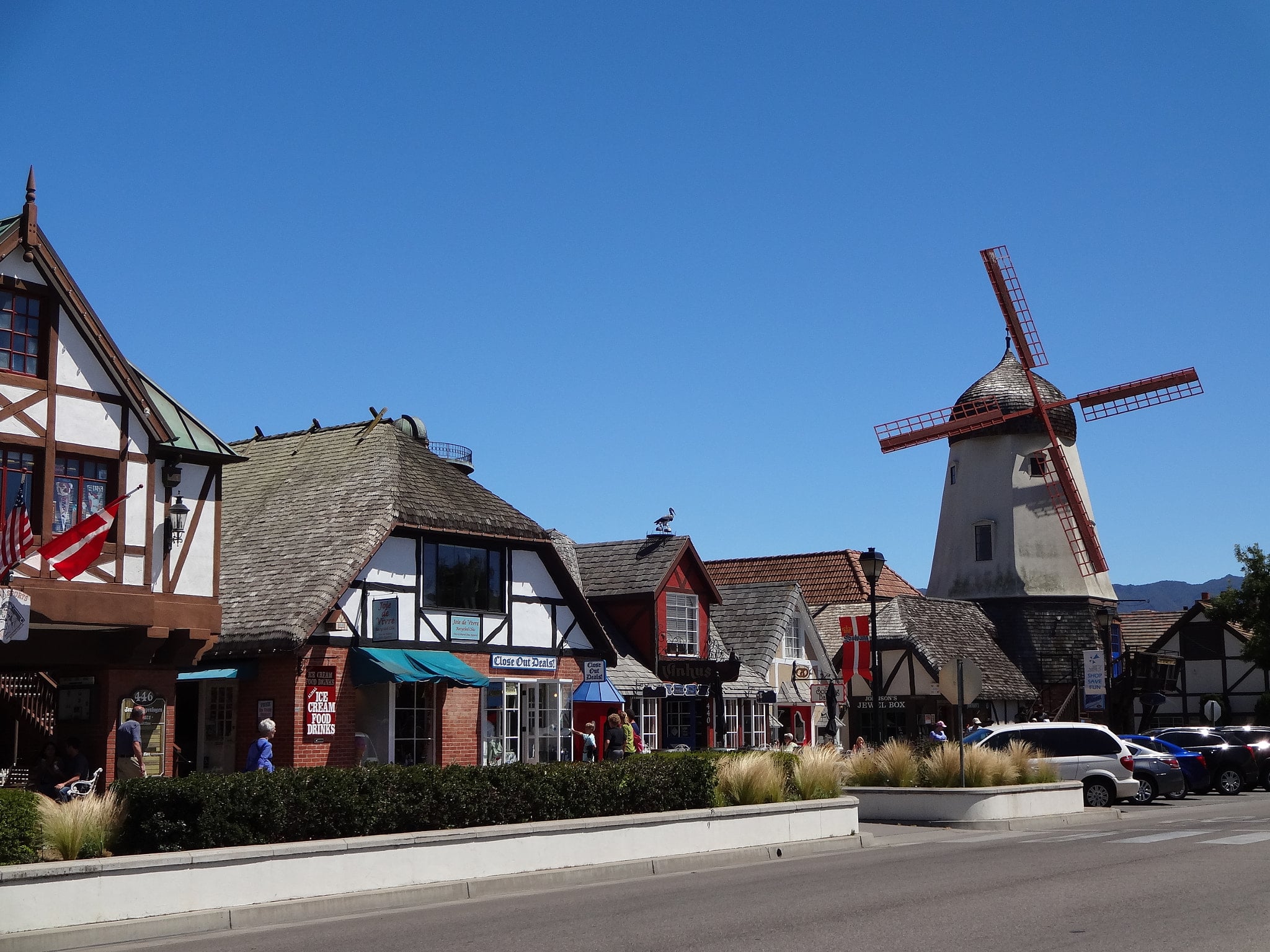
History: In the Santa Ynez Valley, not far from Santa Barbara, lies the city of Solvang. Solvang was founded in 1911 by a group of Danish immigrants who traveled west to escape the brutal Midwestern winters. Originally, the Danes left their native country because of poverty. When they arrived in America, they built their new homes according to traditional Danish architectural styles. Solvang boasts many Danish bakeries, restaurants, shops, four windmills and replicas of Copenhagen’s Rundetårn (Round Tower) and Copenhagen’s Little Mermaid statue. There is even a horse-drawn Danish streetcar to take tourists around. Without a doubt, Solvang looks, feels and even tastes like Denmark. No wonder it has been attracting media attention and visitors since 1947, including several Danish royalties. The descendants of the founders still reside in and have great influence over Solvang.
Danish Influence: Prior to visiting Solvang, I assumed only a block or two would have a Danish theme, but I was shocked to see that it is an entire area. I have visited Denmark three times, so I was able to compare the similarities. The roofs, colors, facades, alleyways and even the way some of the windows were opened looked Danish, as is typical in Nordic countries where air conditioners are not in use, even in the most prestigious hotels.
Wildlife Refuge: After almost a full day of exploring Solvang, I visited a nearby wildlife refuge and fed the ostriches. Heading west, I enjoyed watching a breathtaking Californian sunset on the drive back.
I really enjoyed this journey and I hope you did as well. I hope you will get a chance to visit and experience these towns on your next visit to California, or at least add them to your bucket list. Even if you only get the chance to explore each of these towns briefly, remember the Yiddish saying, “a gast far a veil zeht far a mile,” which means, “a guest for a short while, sees a mile.”
Yanky Schwartz’s first trip on an airplane as a 17-year-old student snowballed into a lifelong passion for travel. He travels the world and has amassed over 260 stamps across three passports and over 18,000 followers on his Instagram page, where he blogs about his adventures. Yanky also considers himself to be a tourist in his own city and is always on the lookout for interesting shops, festivals, street art, shows, landmarks and sights within the borders of his own hometown of NYC. He takes part annually in the world's biggest game of Musical Chairs (around 720 people), the Brooklyn Coffee and Tea Festival, the Honey Festival, events hosted by the New York Transit Museum and more. Yanky’s motto is that there is no excuse not to be awake in the "city that never sleeps." You can find Yanky and his adventures on Instagram @picturemacher.
Originally published in Fleishigs Magazine. Issue #24.
Disclaimer: The status of the kosher certifications of featured restaurants were accurate at the time of original publication. Please verify current certification status independently before visiting. Additionally, some establishments may have since closed.
For more on Fleishigs Magazine visit www.fleishigs.com ~ Use code KOSHER for 18% off subscriptions!

When leaving comments on kosher.com we ask that you be respectful, appropriate, and stay on topic. Click here to read our full comment policy.
Kosher.com Commenting Guidelines
We love hearing from our community! Constructive feedback, tips, questions, and friendly engagement are encouraged.
By commenting on Kosher.com, you agree to follow these guidelines. Please note that comments are for community discussion only and should not be considered halachic guidance—always check with your own Rabbi or LOR.
1. Be Respectful
2. Keep It Appropriate
3. Protect Privacy
4. Stay On Topic
5. Moderation