

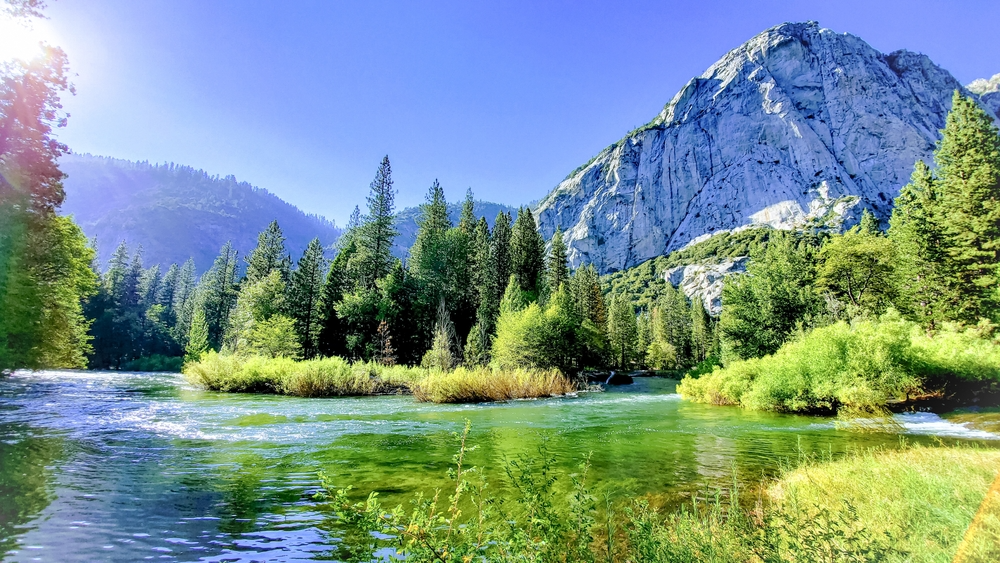
I once saw a cartoon with two chickens on opposite sides of a road. One chicken shouted to the other chicken, "I want to cross to the other side of the road.” The other chicken replied, "You are on the other side of the road.”
When the travel bug rears its head, my mind immediately thinks of the exotic islands of the Caribbean, the romance of Venice, the ancient ruins of Rome, the stunning views of the French Riviera, the holy sites of Israel, the souks and colors of Morocco, the safaris of Africa and the heritage of Eastern Europe. Yet we fail to realize that to some of the seven-plus billion inhabitants of the world, we are actually the ones standing on the other side of the road! In fact, the great “US of A” attracts close to 80 million visitors every year! Think about it — only three European nations have a population of over 80 million people (Russia has approximately 146 million people, Germany has 86 million people and Turkey, which is on two continents, has 83 million people).
In 2019, I visited 25 countries and fulfilled one of my dreams of driving cross-country from New York to California and back. The total mileage from Los Angeles to New York City via interstate highways is around 2,900 miles, yet on my way back I drove close to 6,500 miles by making detours in all directions, covering major US cities, back roads, attractions, historic sites, national parks, natural landscapes and landmarks, visiting many different cultures and communities along the way.
That road trip taught me that America is one of the most underrated countries to travel within. We may not have the clear beach waters of Fiji, nor can we compete with the skyscrapers of Dubai, the antiquity of ancient Rome or the wildlife and tribes of Africa, but when you combine everything America has to offer, no nation comes close. It boasts major cities, skyscrapers, beaches, ski slopes, mountains, deserts, theme parks, shopping, wildlife, music, scenic road trips, wine regions, beer breweries, camping, canoeing and hiking. Let’s not forget about America’s vast culturally diverse population, including the Amish, Mormon, Eskimo, Native American, Chasidim, Cuban, Irish and Danish communities (to name a few). You will find that the list of places to visit and things to do and see in America is endless.
I am sure I was not the only one that had high hopes for the year 2020. There is something special about the end of a decade that gets us excited and encourages us to make resolutions to aim higher. Since 2015, I have visited a minimum of 15 countries each year. I wanted to top off 2020 with at least one country more than the previous year. The year started off on the right foot. I traveled to a wedding in Ukraine and from there I visited Dubai and Abu Dhabi. I returned to the States, which is when the world literally turned upside down. Coronavirus hit the universe and the world was put on hold, keeping everyone at bay, confined and stuck within their own quarantine.
With borders still more or less on lockdown, it was time to look for domestic travel options. With an area of close to 4 million square miles, there is enough to tour and explore for a lifetime without ever having to take along a passport. The options are vast, but room in this article is not. Therefore, I will mention a few national parks, because there is no better way to see this country than visiting its rich resources.
The Great Smoky Mountains
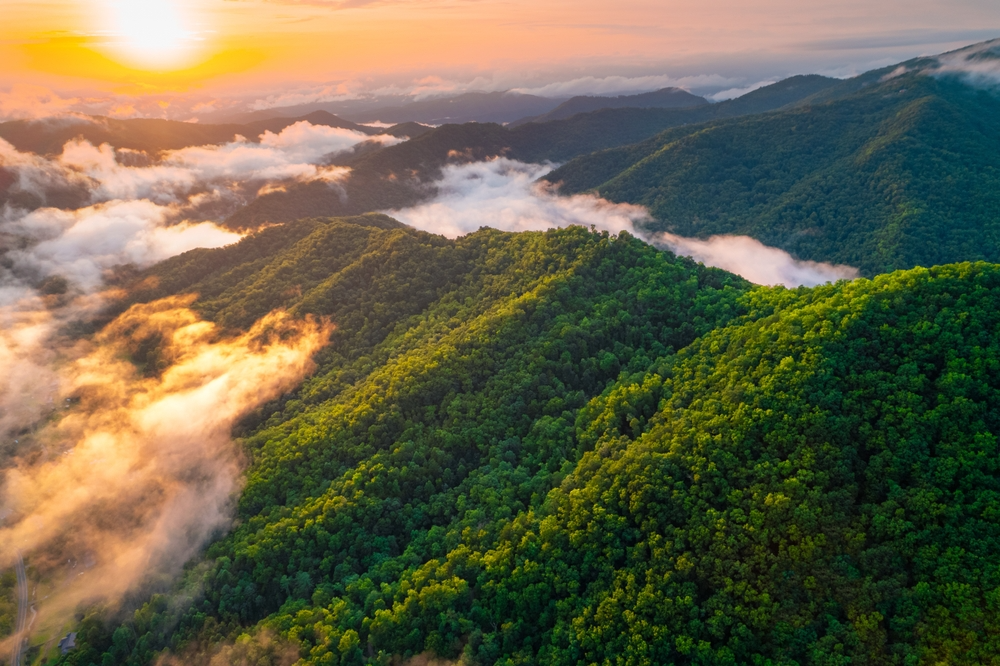
Whenever a New Yorker asks me where to travel with a family within the States, my first response is the Smoky Mountains, which stretch over the border lines of Tennessee and North Carolina. The Smoky Mountains National Park is on the East Coast (close enough to the greater New York area), the most visited national park and a UNESCO World Heritage Site. Besides for the actual hiking trails and over 800 square miles of nature and beauty, it is home to towns like Gatlinburg and Pigeon Forge, which offer hundreds of different attractions, making it the Disney or Las Vegas of country living.
The park is called the "Smokies" because of the natural fog that often hangs over the horizon. When the first Western explorers arrived in the area in the late 17th century, the Native American Cherokee tribe were the inhabitants of the region. You’ll find a Cherokee museum and reserve in the small town of Cherokee on the North Carolina side of the park.
There is an entire “grocery list” of options when it comes to hiking. Stop into the park's visitor center and speak to a park ranger to see which trail fits you best. The park also covers parts of the famous Appalachian Trail, giving you the opportunity to hike and experience parts of the trail.
WHAT TO DO
Don't like to hike? You can still drive through the 33-mile Route 441, known as the Newfound Gap Road, which stretches from Gatlinburg to Cherokee. It is one of the most scenic highways in the Smoky Mountains. There are many spots to stop on the side of the road to take in and photograph the breathtaking views,including spots like Chimney Tops (on foggy days it literally resembles smoke coming out of the mountain tops), Blue Smoke (the Cherokees gave it this name because the mountain ridges appear blue from a distance), Clingmans Dome (the highest mountain in the park) and many more. You can also drive through the scenic 11-mile Cades Cove Loop, a picturesque drive with mountain backdrops and lush green valleys. Europeans settled this area in the early 1800s. Today, visitors can stop and enjoy many restored historic buildings along the loop.
When it comes to the neighboring towns of Gatlinburg and Pigeon Forge, I get dizzy just thinking about summarizing all the attractions! Here, however, is a short list of some of the ones I recommend: Ripley's Believe It or Not, Titanic Museum Attraction, The Island in Pigeon Forge (shopping area, hotel and amusement park), Dollywood (Western-themed park with water slides and live music), Alcatraz East Crime Museum, Hollywood Wax Museum, Pigeon Forge Snow (year-round snow park with tubing and slides), four different go-kart companies, alpine slides, a few escape rooms, numerous arcade shops, indoor skydiving, ziplining, ATVing, portrait studios, gemstone mining, trampoline parks, horseback riding, mirror mazes, zoos, aquariums, vintage steam train rides, moonshine distilleries, ferris wheels, laser tag, cable cars leading up to mountain tops and even a Salt and Pepper Shaker Museum. I officially give up because the list is extensive! My best piece of advice is to not try and push everything into one trip, because it simply will not fit. Rather, make the most of your days by waking up early and fitting in as much as you can.
WHERE TO STAY
There are many hotels where you can stay, but when in Rome, do like the Romans and when in The Smokies, do like the Smokians. Don’t settle for a hotel room. There are hundreds, if not thousands, of vacation rentals and log cabins with balconies and scenic views that you can book either through Airbnb, Home Away or private agencies. They vary in size and they can range anywhere from $100 to over $1000 a night.
WHAT TO EAT
There is no kosher food in the area, but there is a Walmart where you can find plenty of kosher products. Do not leave any food outside — the Smokies is home to the densest black bear population in this part of the United States. Last but not least, please do not litter! Respect the area as you would your own.
Sequoia and Kings Canyon National Parks
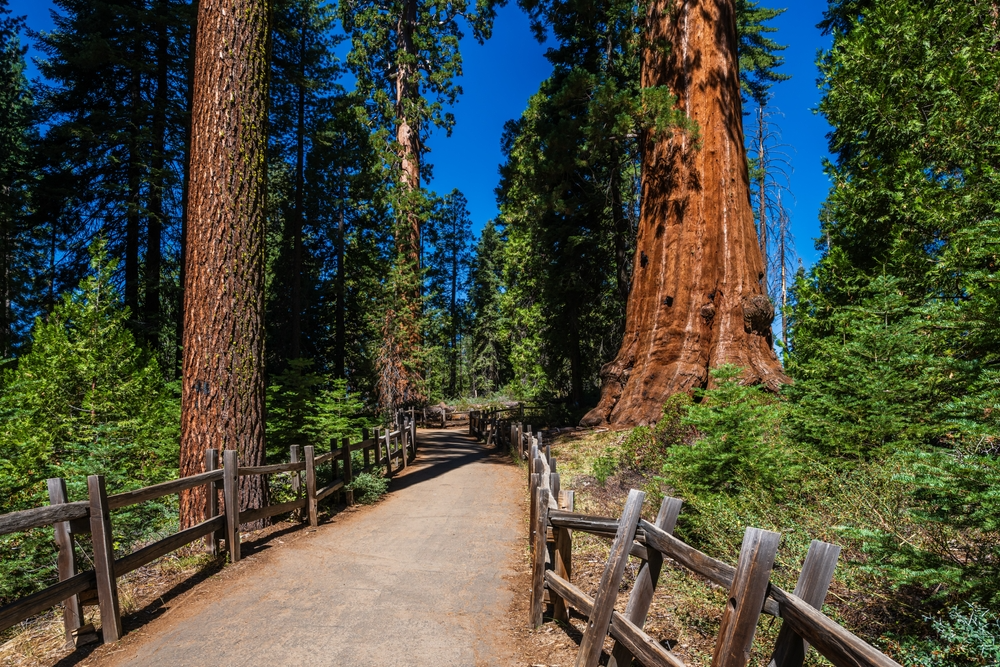
With a list of 61 national parks, it is very hard to choose which park to visit. But Sequoia and Kings Canyon stand out because of their significance. Witnessing the enormous sequoia trees is definitely a reason to choose it over other parks. The parks are technically separate, but in many ways are administered as one.
Situated in the Sierra Nevada mountains in California, Sequoia and Kings Canyon are UNESCO World Heritage Sites. Sequoia is home to Mt. Whitney, the highest point in the contiguous United States (a six-hour drive from the main entrance) and is also home to five of the ten largest trees in the world, including the General Sherman tree, which is the largest tree on earth (and still continues to grow).
WHAT TO DO
Upon entering the park's main entrance on State Route 198, also called the Generals Highway, there are many viewpoints where you can stop to photograph the scene or hike one of the many trails. The road itself is a steep climb with breathtaking twists and turns. The higher you ascend in altitude, the bigger the trees become. The road leads you to the General Sherman Tree and to Kings Canyon National Park. The parks are not only blessed with giant trees, but equally with valleys, meadows, crests, canyons and rivers.
Follow the signs and get off the main road to climb the 500 steps up to Moro Rock — a granite dome with a view of The Great Western Divide, which is the mountain range forming the border between Kings Canyon and Sequoia National Parks. Make sure to visit the Parker Group, which is a cluster of giant trees. The eight Parker sequoia trees were likely born at the same time and are named after the family of U.S. Army Captain James Parker, who was the park's superintendent in the 1890s. Not far from the Parker Group is Tunnel Log, a car tunnel carved in the 1930s out of a trunk of a sequoia tree that fell over the road. Driving through it is a surreal experience. In the same area, you can also take the trail leading to Tharp's Log. It is named after Hale Tharp, the first non-Native American to enter the forest. He hollowed out the fallen log and used it as a cabin for his nearby cattle ranch. Walk under one of the trees at the Fallen Monarch, which has served as a Native American shelter, hotel, saloon and stable for horses. Tour the Crystal Cave with its geologic features or cool off in Hume Lake, surrounded by beautiful mountains and dense forests.
This article is only touching the tip of the iceberg and there are far too many attractions to mention, including Hanging Rock, Gamlin Cabin, Canyon View, Cedar Grove and more. Do your research, as nobody can custom design a trip according to your likings better than yourself.
WHERE TO STAY
Sequoia is not Los Angeles, Paris or Tel Aviv, so do not expect any five-star hotels in this region. There are, however, some decent hotels, lodges, bed and breakfasts, RV and camping sites and plenty of cabins on Airbnb. Do not stay too far from the park, as you do not want to spend most of your time driving to and from the park.
Because of the combination of hot weather, wind, drought and dry vegetation, the Golden State is prone to wildfires. In 2019, close to 2.5 million acres were consumed by fire. When I visited at the end of 2018, there were still remnants of the previous year's fire. Around 95% of California's wildfires are caused by humans. Be responsible and don't smoke or light fires in the park.
WHAT TO EAT
Stock up before you get there (the closest Walmart is over a 30-minute drive from the parks). Buy your charcoal, grill, wood, sunscreen, water, etc. ahead of time. Otherwise, you will pay double. California's state symbol is the bear and although you won't bump into any bears in Los Angeles, San Francisco or Hollywood, you might bump into one in the park (I saw three). Thus, do not leave any food outside, hum a tune when you walk the trails to avoid surprising any bears with your presence and make sure to take along a whistle and a flashlight.
Most of all, do not forget to take lots and lots of photos! You will relive your experience whenever you gaze at them in the future.
Have a fun trip!
Yanky Schwartz’s first trip on an airplane as a 17-year-old student snowballed into a lifelong passion for travel. He travels the world and has amassed over 133 stamps across three passports and over 18,000 followers on his Instagram page, where he blogs about his adventures. Yanky also considers himself to be a tourist in his own city and is always on the lookout for interesting shops, festivals, street art, shows, landmarks and sights within the borders of his own hometown of NYC. He takes part annually in the world's biggest game of Musical Chairs (around 720 people), the Brooklyn Coffee and Tea Festival, the Honey Festival, events hosted by the New York Transit Museum and more. Yanky’s motto is that there is no excuse not to be awake in the "city that never sleeps." You can find Yanky and his adventures on Instagram @picturemacher.
Originally published in Fleishigs Magazine. Issue #19.
Disclaimer: The status of the kosher certifications of featured restaurants were accurate at the time of original publication. Please verify current certification status independently before visiting. Additionally, some establishments may have since closed.

When leaving comments on kosher.com we ask that you be respectful, appropriate, and stay on topic. Click here to read our full comment policy.
Kosher.com Commenting Guidelines
We love hearing from our community! Constructive feedback, tips, questions, and friendly engagement are encouraged.
By commenting on Kosher.com, you agree to follow these guidelines. Please note that comments are for community discussion only and should not be considered halachic guidance—always check with your own Rabbi or LOR.
1. Be Respectful
2. Keep It Appropriate
3. Protect Privacy
4. Stay On Topic
5. Moderation