
By now, you probably have seen dozens of creative hamantaschen recipes. Whether sweet or savory, stuffed with pulled beef or Greek yogurt, the food bloggers and magazines have gotten very creative in providing us with lots of fun ideas.
The thing that stands out most about Purim is that the preparations for the festivities are just as fun as the actual day. There is nothing like a baking party with differently flavored dough, a spread of both savory and sweet fillings and, if appropriate, open bottles of wine.
Here are some tester’s notes to make sure every batch of hamantaschen comes out perfectly.
1. Rolling the Dough (by Faigy Akda)
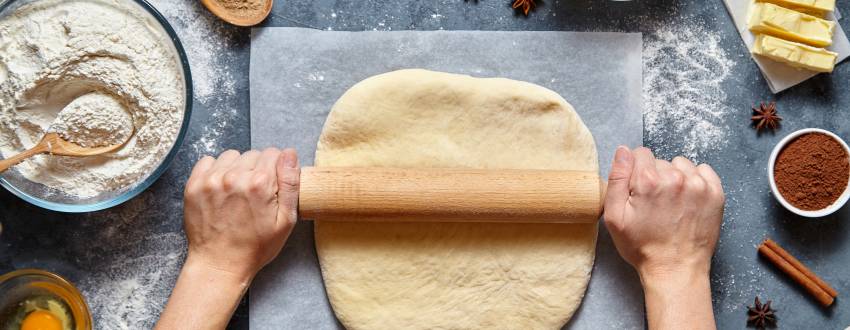
A common mistake is that people roll their dough out very unevenly, with the dough on the sides ending up thicker than the edges. You want to avoid this because thinner places in the dough will brown (read: burn) more quickly in the oven than the thicker areas. To prevent this, try using a French rolling pin (a wooden pin that is thick in the middle and narrowed at the ends) and refrain from rolling the dough to the very edges. Roll from the center of the dough to one inch of the edge.

2. Too Much Filling (by Faigy Murray)
Everyone loves when their hamantaschen are full of their favorite fillings. It’s kind of tempting to add as much jam into the small circle as possible. Whatever filling you choose — classic prune, hazelnut, or even something fancy like Dubai chocolate — keep it minimal.
This is the one time I’ll tell you not to be generous with the filling. Too much will prevent the hamantaschen from staying closed, and they’ll open up while baking.
Additionally, you have to make sure the filling is a thick consistency. Just because it’s sweet and comes in a cute jar doesn’t make it fit for baking. Stick to those thicker preserves instead of the watered down jellies.
3. Pinch the Corners (by Sara Goldstein)
Sometimes no matter how tightly you pinch the three corners of your dough, the filling finds its way onto the baking paper. This can be resolved by, firstly, not overfilling the hamantaschen. You can also dip your finger in a bowl of water and run it around the inner rim of the circle before folding.

4. Preheating Your Oven (by Faigy Akda)
How many of us constantly question the importance of pre-heating your oven? It’s often a step that is missed, a waste of time almost, no? However, after learning why, you’ll change your mindset.
Time and temperature affect the texture and flavor of baked good, and starting in a cold oven changes both of those variables. When you give your baked goods a cold start, you’re most likely to end up with something hard and dry and definitely not crispy and crunchy. The expansion that you are looking for when you include baking soda/powder or yeast happens with the heat from the get-go. So, no matter how much of a rush you are in, preheating your oven is essential.
5. Parchment Paper Hack (by Chanie Nayman)
Roll your dough between two sheets of parchment paper to keep the counter clean and prevent it from sticking to the rolling pin. This also avoids the need to add extra flour to your surface, which can result in a dry dough.
6. Chill Your Dough (by Sina Mizrahi)
My best baking tip would be to work with a chilled dough. It makes rolling and shaping much easier!
7. Use Real Baking Sheets (by Sara Goldstein)
I highly suggest using real baking sheets as opposed to disposable ones. They really make for a better final product.
Originally published March 2025. Updated and improved February 2026.


Photos from Our Community
See how these recipes turned out in real kitchens. Photos from home cooks will appear here as they're shared.
Tell Us What You Think
Your review could help someone decide what's for dinner tonight. Log in to join the conversation.
Log in to join the discussion0 Comments
Do you want to rate this post?
Edit your rating
Choose a new star rating and save it.
Moderation
Report
Kosher Comments
Kosher Comments
Add a link
Posting comment
Your comment will be posted in a moment...