
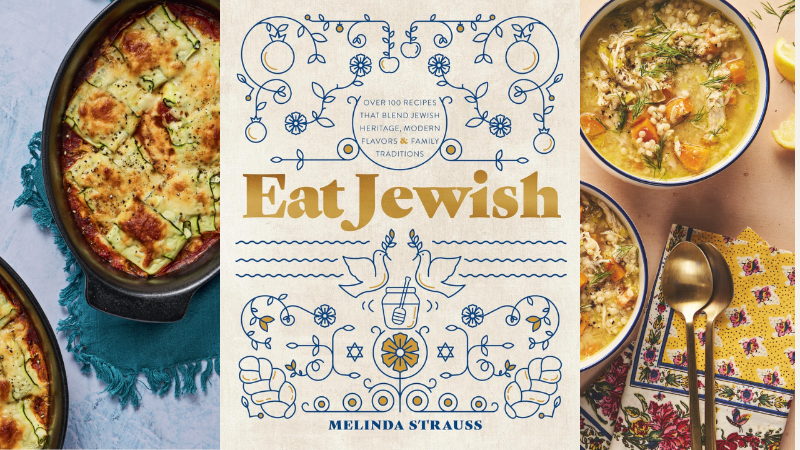
Referring to Eat Jewish as just a cookbook would be doing Melinda Strauss’s awesome new collection of over 100 recipes a disservice.
Sure, the 255 pages of Eat Jewish are filled with goodies galore, each one accompanied by clear instructions and introductory remarks written in the warm and engaging style that have earned Strauss over 1.5 million followers on TikTok and another 250,000 on Instagram. But much like the delight of working your way through an ice cream sundae one layer at a time, there is much to savor in Eat Jewish. This book is written for anyone with a hankering for homemade Jewish goodies, from culinary connoisseurs to kitchen klutzes, and from Brooklyn balabustas to Mississippi ministers.
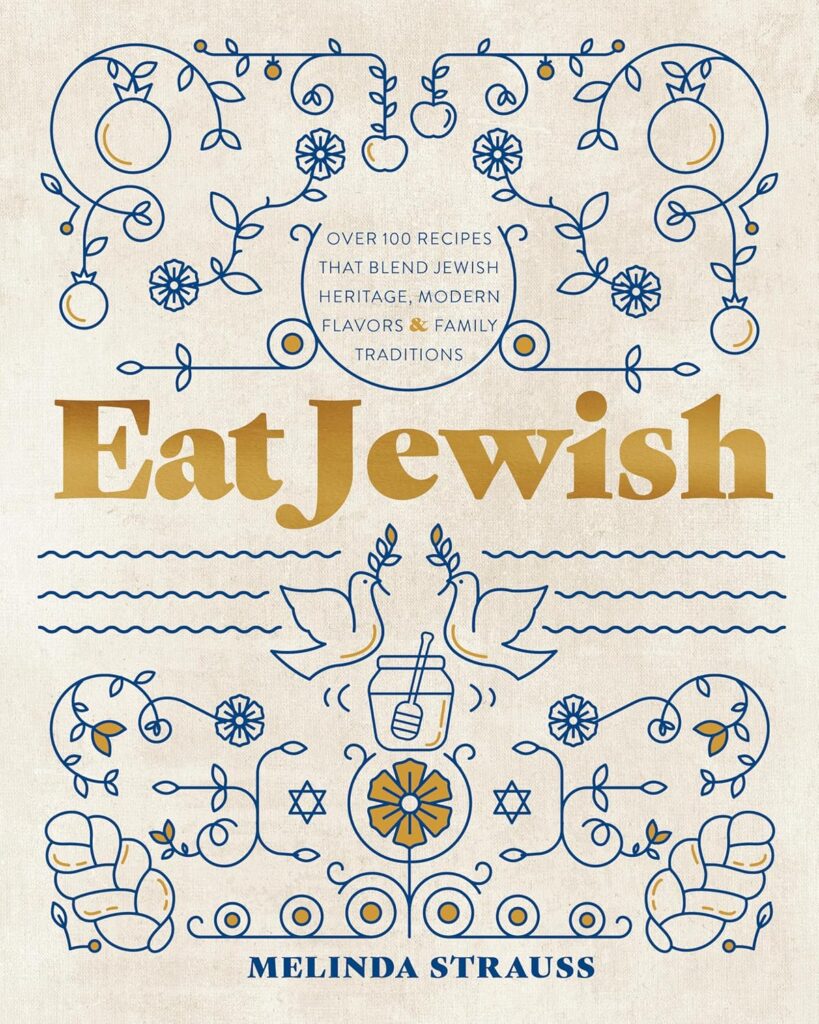
Strauss’s book contains several pages that could aptly be described as Judaism 101. In addition to explaining who the Jewish people are and what kosher means, Eat Jewish offers readers a four-page-long peek at the Jewish calendar, with brief but well-written explanations of Shabbos, Rosh Chodesh, yomim tovim, and other notable days, as well as their associated traditions. In a time and place where so misinformation about Judaism abounds, Strauss does an excellent job of clarifying concepts that may not be well known outside the Orthodox Jewish world, while also making kosher cooking eminently approachable.
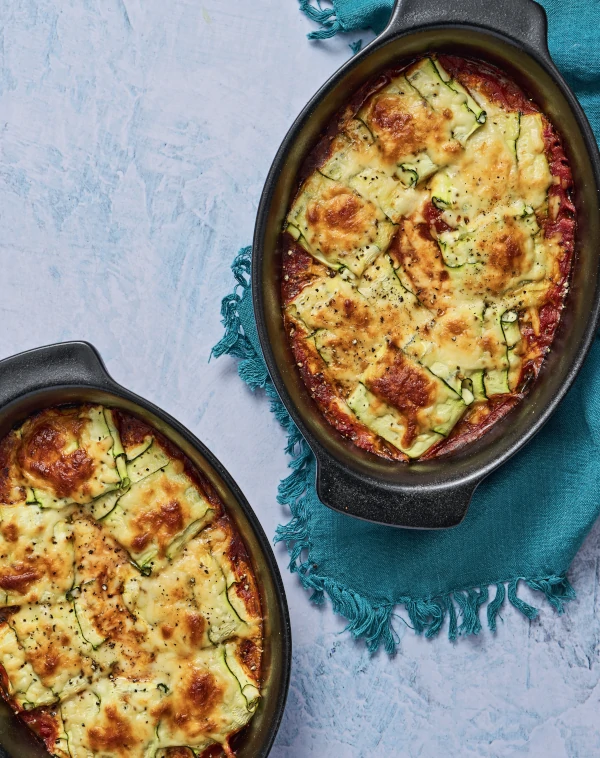
Zucchini Ravioli- recipe can be found here.
That universal appeal carries through in the recipes as well. You want traditional, stereotypically Jewish food that evokes recipes of a grandmother whose white hair (albeit with a slightly bluish tint), saying “Ess, mein kindt”? Strauss has you covered with recipes for sweet and fluffy challah, chopped liver with caramelized onions, chicken with dumplings, and cinnamon sugar mandelbroit. Looking for trendier fare? Check out the Mediterranean sea bass, roasted purple cabbage, strawberry galette, and the garlic and onion confit. What really appealed to me, personally, were the fusion recipes that infused traditional recipes with a contemporary flair such as brussels sprout and beef bacon latkes, Biscoff babka buns, chicken falafel salad, and butternut squash kugel.
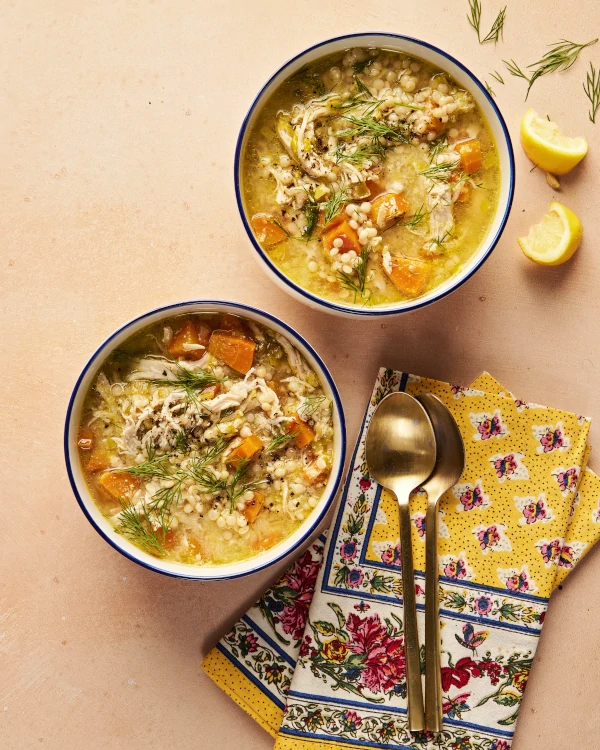
Avgolemono (Greek Lemon Chicken Soup)- recipe can be found here.
And if you think Strauss is all about Ashkenazi food, you might want to think again, because she has a soft spot in her heart for Sephardi cuisine, and that affinity is well represented here. Strauss happily shares recipes for spinach quashado (Turkish crustless quiches), avgolemono (Greek lemon chicken soup), fasulye (Turkish stewed green beans) and boykios (Balkan cheese biscuits), recipes that are equal parts labors of love and vehicles that bring people together.
I had the privilege to speak with Melinda about her new book! Let’s jump in!
Kosher.com: It is so clear reading Eat Jewish that food is so much more than just something you eat. It is family. It is love. It is memories. How did you come to feel that way?
Melinda Strauss: My family is the reason I love food so much and honestly, they’re the reason I ever learned how to cook in the first place. I’m not a trained chef. There was no culinary school in my story. But I did have the best teachers: my mother and grandmothers… and sometimes my dad too, though he took over the kitchen more recently. I grew up watching them cook, chop, taste, and feed the people they loved, and those moments were my very first cooking lessons.
I actually didn’t start cooking for myself until college, when I was diagnosed with type 1 diabetes. Nothing motivates a college kid to get in the kitchen like suddenly needing to understand exactly what’s in your food! That diagnosis forced me into the world of ingredients and home-cooked meals.
Now, every time I cook, whether it’s a simple weeknight dinner or a Shabbat spread, I think of my childhood. That’s where my real culinary education came from. From home.
K.C: You are clearly appealing to a market that goes beyond the Jewish world. What made you want to reach out to such a global audience?
MS: This cookbook was inspired by my TikTok community. When I first started sharing there, most of my followers were actually not Jewish, and they were endlessly curious. They asked thoughtful questions about Judaism, Jewish food, holidays, history, and life. Over time, my audience grew into this incredible, diverse mix of people. Jews from every corner of the Jewish world (from Hasidic to traditional to secular to “Jew-ish”), plus a huge community of non-Jews who simply want to learn and connect. And somewhere along the way, it became clear to me that this book wasn’t just for one group. It was for everyone. Because Jewish food isn’t exclusive! It’s full of history, flavor, and stories. It’s meant to be shared. And if there’s anything I’ve learned from cooking online with millions of people watching, it’s that food can spark conversations that we didn’t even know we needed. Food is the great equalizer between cultures and communities. That’s what this book is: an invitation. To taste something delicious, to ask questions, to learn, and to celebrate Jewish life.
K.C: What made you take the leap from social media to a cookbook?
MS: I’ve been a food blogger for almost 15 years, so writing a cookbook always felt like something I might do eventually. But for the longest time, I couldn’t figure out what that cookbook should be about. I’ve created and posted so many recipes over the years, but nothing ever felt quite right until I started leaning into Jewish education on social media.
That’s when it finally clicked: Eat Jewish isn’t just a collection of recipes. It’s an extension of everything I share online, the stories, the traditions, the questions, the pride. It’s a way to teach through food, to show people that Jewish cooking isn’t just delicious, it’s meaningful. It’s our history.
K.C: Eat Jewish very much felt like a trip around the world. Is that reflective of your childhood? And do you continue that multi-cultural vibe in your home?
I grew up in Seattle in a mixed Jewish community, Ashkenazim alongside Turkish and Greek Sephardic families. Shabbat tables looked different from house to house and I was always excited to go to my friends’ homes to try something new. That diversity shaped me early. It showed me that there isn’t just one way to be Jewish, and there definitely isn’t just one way to Eat Jewish.
When I started writing this book, I quickly realized something important: there was no way I could include every style of Jewish cooking. There is still so much I’m learning, and so many dishes and traditions I haven’t experienced yet. Jewish cuisine is global, ancient, evolving.
So I focused on what I knew well: my Jewish story. The recipes tied to my memories, my holidays, my grandmother’s kitchens, and the traditions that made me fall in love with Jewish food in the first place.
K.C: What are your kids’ favorite recipes in the book?
MS: My son is alllllll about the Spaetzle with Mushroom Sauce. And for Nora… honestly, could it be anything other than Nora’s Broccoli? The recipe that basically started this whole cookbook journey!
You can purchase Eat Jewish on Amazon and at most local Judaica stores.


Photos from Our Community
See how these recipes turned out in real kitchens. Photos from home cooks will appear here as they're shared.
Tell Us What You Think
Your review could help someone decide what's for dinner tonight. Log in to join the conversation.
Log in to join the discussion0 Comments
Do you want to rate this post?
Edit your rating
Choose a new star rating and save it.
Moderation
Report
Kosher Comments
Kosher Comments
Add a link
Posting comment
Your comment will be posted in a moment...