

My father recently gave me a magnet to stick on the back of my car. It simply said: "Don't leave kids in the car." I immediately placed it on my car in hopes that it would help other parents.
It resonated with me because this is something I think about every single morning when I drop off my kids. I double-check, even triple-check the back seats. I'm sure many parents can relate.
As the summer heat intensifies, it is absolutely vital that children are never left unattended in a vehicle—period.
Accidents happen all around us. Just the other day, I watched a car in front of me slowly pull away from drop-off. The driver thought all of the children had been taken out of the back seat. A teacher quickly noticed that the baby was still in the car and ran over to knock on the window before the vehicle left. (True story.)
The whole ride home, I couldn't stop thinking about it. What if the baby had fallen asleep and the parent genuinely didn't realize the child was still back there? These situations are unintentional, but they do happen. Busy schedules, lack of sleep, distractions, changes in routine. Any parent can have a momentary lapse.
That's why I'm sharing this article: to provide practical tips that can help prevent a child from being left in a vehicle. Whether it's placing your work bag in the back seat, setting phone reminders, creating a drop-off confirmation system, or simply making it a habit to check the back seat every time you park, the important thing is to find a solution that works for you and stick with it.
Please consider sharing this article in your community chats, online groups, parent pages, and with family and friends. Raising awareness and encouraging simple safety habits can save lives.
Here's to a safe and healthy summer for all of our children.
Make the back seat impossible to ignore.
Place something you always need at your destination in the back seat. Put these items next to the child's car seat so you must open the rear door before leaving:
-Work badge
-Your shoe
-Laptop bag
-Purse or wallet
-Phone
-House keys
Create a "back seat check" habit.
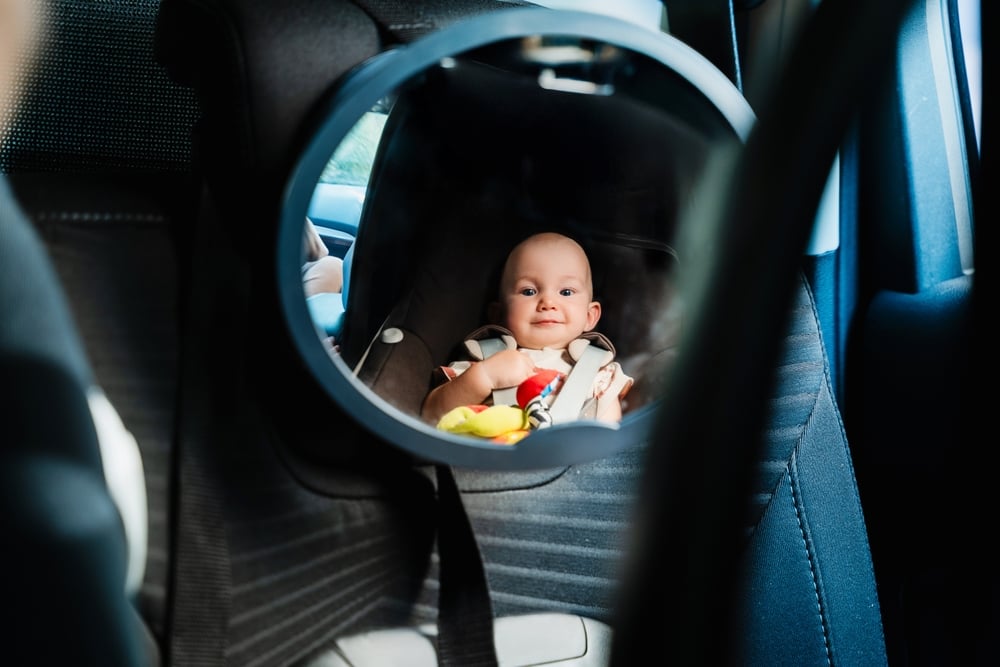
-Make it a personal rule: every time you park, open the rear door before locking the car. I have rear-facing mirrors for easier checking. Some families place a small sticker on the dashboard or all windows reading "CHECK BACK SEAT."
Use daycare or caregiver verification.
Ask childcare providers to call or text if the child has not arrived by a certain time. Establish a policy that a missed arrival triggers contact with all caregivers immediately. This is especially useful when routines change unexpectedly.
Share responsibility with another adult.
If one parent is doing drop-off, send a quick text such as: "Dropped Emma off at daycare." The other parent can follow up if the message doesn't arrive on schedule.
Use calendar and phone reminders.
Set recurring reminders for drop-offs. Specific reminders can be especially helpful: "Did you drop off Emma?". Trigger the alarms and reminders when arriving at work or another destination.
Be extra cautious during routine changes.
Many incidents occur when a parent who does not normally do drop-off is driving (like a friend or grandparent), the child falls asleep and becomes quiet, or the driver is stressed, distracted, or sleep-deprived.
When your normal routine is disrupted (whether you are the usual driver or covering for someone else):
-Place a visible reminder (such as a sticky note on the dashboard, steering wheel, or phone) to prompt a deliberate back-seat check before leaving the vehicle.
-Set multiple reminders or alarms for the drop-off time so you are not relying on memory alone.
-Let another adult know about the change in routine and ask them to check in if they don’t hear back as expected.
Use technology features when available.
Many newer vehicles have rear-seat reminder systems that alert drivers to check the back seat after parking. If your vehicle has this feature, ensure it is enabled. Some child-seat accessories and smartphone apps can also provide reminders.
Keep visual cues obvious.
Place a brightly colored soft toy in the empty car seat. When the child is buckled in, move the toy to the front passenger seat. Seeing the toy in front reminds you a child is in back.
Maintain communication during commutes.
If age-appropriate, talk or sing with the child periodically. Silence can make it easier for a child to fall asleep and become quiet.
Treat every trip the same way.
The safest approach is to avoid relying on memory or confidence. Instead, use a checklist-style routine every single time that will work best for you. (Keep the checklist on the back of your phone until it's second nature.) An example might be:
1. Park.
2. Turn off vehicle.
3. Grab phone from backseat
4. Check car seats.
5. Lock vehicle.
Choose one or more of the ideas above and pass them along to other parents or caregivers you know!
Products that can help:

When leaving comments on kosher.com we ask that you be respectful, appropriate, and stay on topic. Click here to read our full comment policy.
Kosher.com Commenting Guidelines
We love hearing from our community! Constructive feedback, tips, questions, and friendly engagement are encouraged.
By commenting on Kosher.com, you agree to follow these guidelines. Please note that comments are for community discussion only and should not be considered halachic guidance—always check with your own Rabbi or LOR.
1. Be Respectful
2. Keep It Appropriate
3. Protect Privacy
4. Stay On Topic
5. Moderation
plain and simply either keep your keys or your shoes by the infant.