
Please enter the email you’re using for this account.



 Parve
Parve Medium
 3 Hours, 30 Minutes
 Diets
Diets 
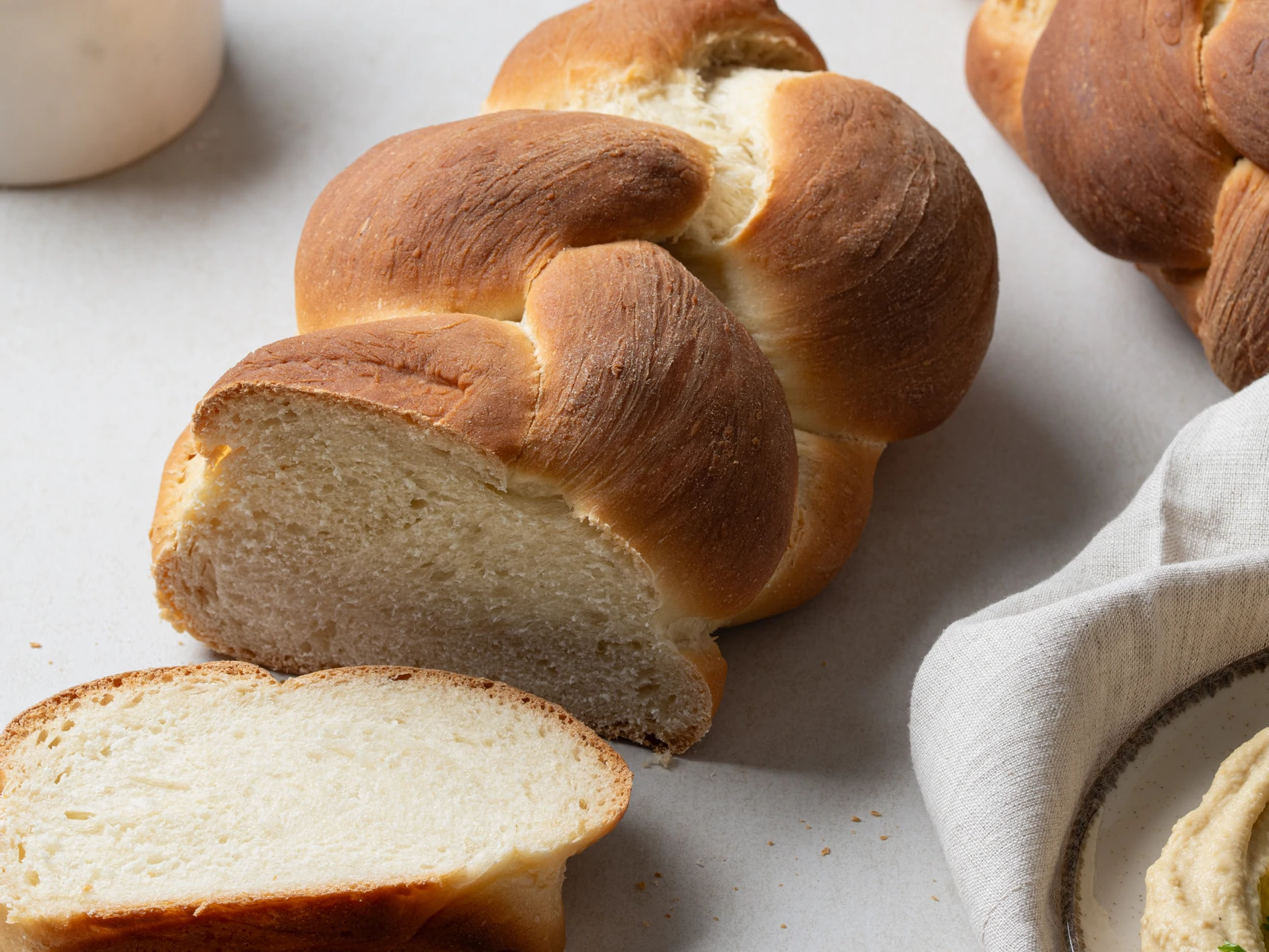
Our mother always made egg challos. Then, one Shabbos, we hosted Sefardi friends for Shabbos. Our mother had previously heard that Sefardim don’t use egg challah for hamotzi, and she remembered that our aunt had recently raved about an amazing water challah recipe she’d had at a friend’s Shabbos table. So she got the recipe and made those challos for Shabbos. The rest is history. Everyone loved the water challah so much that we never went back to egg challah!
This recipe calls for 5 pounds (2.25 kilograms) flour so you can be mafrish challah with a brachah. Our mother lost her father this year, and it would mean a lot to her if you can have him in mind when you’re mafrish. L’illui nishmas Shmuel Zev ben Aharon. Tizku l’mitzvos.
Yields 6 large or 8-10 small challos
1 cup warm water
5 tablespoons Gefen Dry Yeast
2 cups + 1 tablespoon sugar, divided
4 cups water
2 tablespoons salt
1 cup oil, such as Gefen Canola Oil
5 pounds (2.25 kilograms) high-gluten flour


Mix the warm water, yeast, and one tablespoon sugar and let sit for 10 minutes.
Add water, salt, oil, and two cups sugar. Mix, then add the flour.
Allow to rise for one hour and 15 minutes. Punch down and let rise for another 15 minutes.
Take challah and say the brachah. Braid your challos, then let them rise for another 45 minutes.
Preheat oven to 350 degrees Fahrenheit (175 degrees Celsius).
Bake for 45 minutes. If making small challos, check after 30 minutes.
Styling and Photography by Chay Berger
Food Prep by Leah Hamaoui
How Would You
Rate this recipe?


When leaving comments on kosher.com we ask that you be respectful, appropriate, and stay on topic. Click here to read our full comment policy.
Kosher.com Commenting Guidelines
We love hearing from our community! Constructive feedback, tips, questions, and friendly engagement are encouraged.
By commenting on Kosher.com, you agree to follow these guidelines. Please note that comments are for community discussion only and should not be considered halachic guidance—always check with your own Rabbi or LOR.
1. Be Respectful
2. Keep It Appropriate
3. Protect Privacy
4. Stay On Topic
5. Moderation