


First massage your cabbage with the salt, let it sit for approximately half an hour in a bowl, and it begins to sweat and creates your brine for you! What you are looking for is for all the water to be drawn out of the cabbage by the salt and to start seeing a salt-water brine starting to form at the bottom of the bowl. You will need enough brine to cover your sauerkraut in the jar you will be using to ferment it.
After your cabbage is massaged with salt and you have the salty liquid, gently mix in your grated apple and pickling spice until it is combined evenly. Now it’s ready to go into your mason jar.
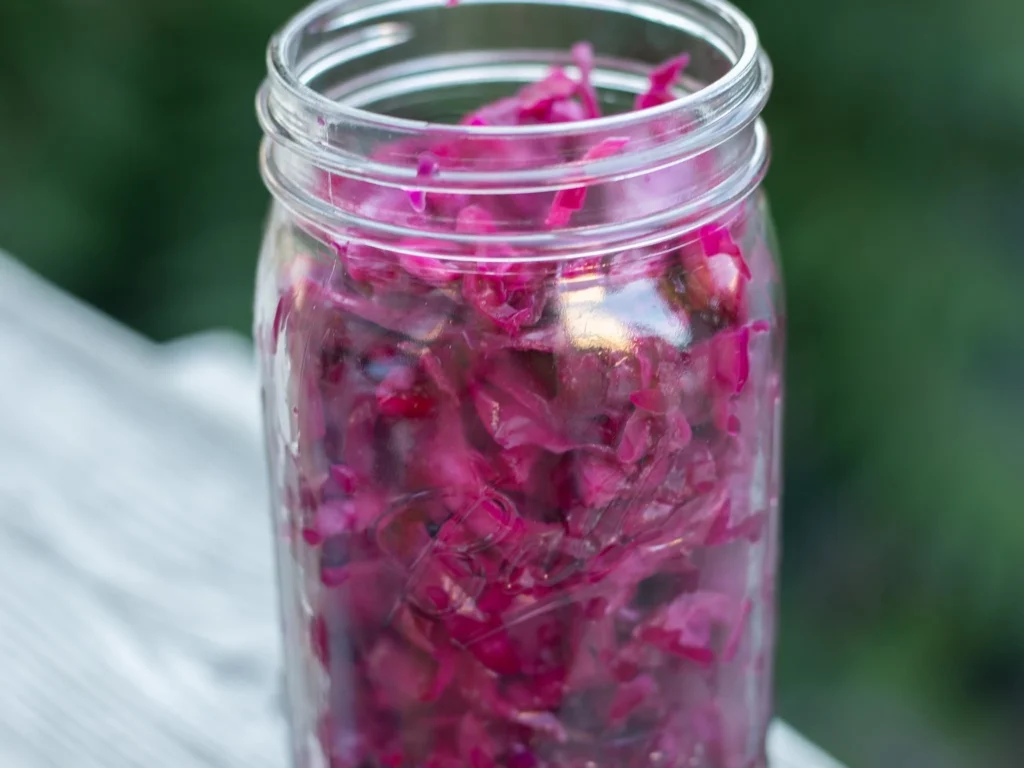
Make sure the vessel can breathe but can be sealed enough to keep out any unwanted bacteria and yeasts. I used a paper bag and tied it with a string. You will also need to make sure your container is deep enough that your sauerkraut can be pushed below the brine level for fermentation. Put your jar directly over the bowl, and begin packing your kraut into the jar. Don’t forget to pack all that nice brine at the bottom of the bowl.
Let your kraut ferment for three to five days at room temperature. (The longer you ferment, the more sour and strong the flavor.) When your sauerkraut reaches the desired flavor, screw on a lid and refrigerate. Eat within one month.
If desired, you can add maple syrup or honey for a little added sweetness after the cabbage is fermented.
Directions
Credits
Tips:
A general rule of thumb is to keep your recipe ratio at 75% cabbage, and 25% other vegetables, like onions, radishes, cucumbers, carrots, or anything else. Here I use grated apple, which adds a beautiful sweet and tart flavor.
Description:
Photography by Mushka Krinsky



Photos from Our Community
See how these recipes turned out in real kitchens. Photos from home cooks will appear here as they're shared.
Tell Us How It Went: Share Your Experience
Your review could help someone decide what's for dinner tonight. Log in to join the conversation.
Log in to join the discussion0 Comments
Do you want to rate this post?
Edit your rating
Choose a new star rating and save it.
Moderation
Report
Kosher Comments
Kosher Comments
Add a link
Posting comment
Your comment will be posted in a moment...