


Place fruit in bowl and using an immersion blender, puree fruit until thick in consistency.
Pour over baking sheet lined with a silpat liner. The puree should be half an inch thick in height. Too thin will make it crunchy, too thick will take fruit leather too long to dry and possibly breed bacteria.
At this point, if you have a home food dehydrator, place shelves of fruit leather in the dehydrator and follow manufacturer’s directions.
Alternatively, preheat your oven to the lowest setting (usually 170 degrees Fahrenheit). The point of the oven is not to bake the fruit leather, but to act as a dehydrator and the warm air dries out the climate in the oven.
Leave fruit leather in oven six to eight hours or overnight – depending on your oven. Leather is ready when it doesn’t stick to your hand when you touch it. If edges are getting crispy, don’t worry. The center usually takes the longest to dry.
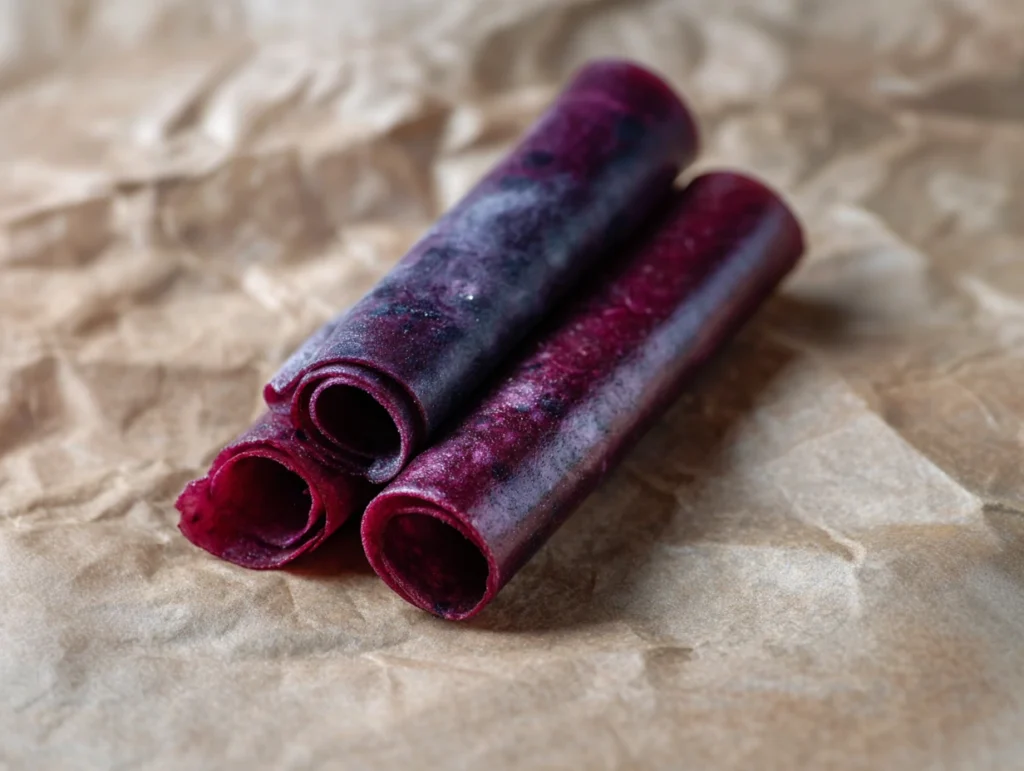
When done, peel off fruit leather and wrap in baking paper or wax paper. Roll jelly-roll style. You can cut into sections if you like. My kids love to make designs with the mixture when they pour it on the silpat. So long as it is even, it should be fine.
Directions
Notes:
While the recipe below calls for strawberries and blueberries, kiwi, mango, papaya, and pineapple are great alternative fruits to mix into a fruit leather.
This recipe image was generated using AI.


Photos from Our Community
See how these recipes turned out in real kitchens. Photos from home cooks will appear here as they're shared.
Tell Us How It Went: Share Your Experience
Your review could help someone decide what's for dinner tonight. Log in to join the conversation.
Log in to join the discussion0 Comments
Do you want to rate this post?
Edit your rating
Choose a new star rating and save it.
Moderation
Report
Kosher Comments
Kosher Comments
Add a link
Posting comment
Your comment will be posted in a moment...