

Please enter the email you’re using for this account.
Allergens No Allergens specified
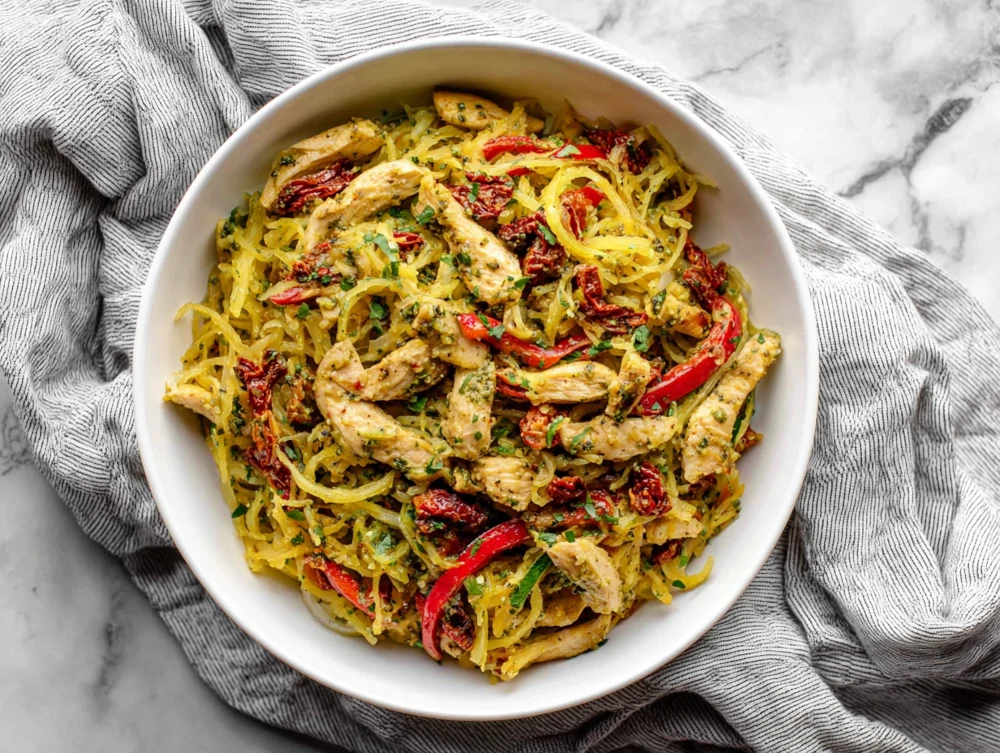
Diets Spaghetti squash is a gourd that I’ll use in heavy rotation and then forget about for a few months. Fresh pesto and well-seasoned chicken round out a cozy winter bowl I hope you’ll love eating!
2 large spaghetti squash
1 cup fresh basil pesto (recipe follows)
1 pound ground chicken
1 teaspoon salt
1/2 teaspoon black pepper
2–4 tablespoons Gefen Olive Oil
1 onion, diced
2 cups packed fresh basil (large stems removed)
3 tablespoons pine nuts or walnuts (if nut-free, try sunflower seeds!)
2 tablespoons Gefen Lemon Juice
3–4 tablespoons nutritional yeast
1/4 teaspoon Tuscanini Sea Salt (plus more to taste)
2–3 tablespoons oil, such as Gefen Canola Oil
3–6 tablespoons water (plus more as needed)
Preheat oven to 375 degrees Fahrenheit.
Cut the spaghetti squash in half and remove the seeds.
Place the squash face down in a baking dish or on a rimmed cookie sheet with a small amount of water.
Bake about 45 minutes or until just tender and the inside flakes away in noodle-like strings.
While the squash is cooking, heat up one tablespoon oil in a pan and add diced onion. Sauté until translucent. Add the chicken. (Add extra oil if needed.) Season with salt and pepper and sauté until cooked through, about 15 minutes more.
When the squash is finished cooking, scrape the inside of it out into large bowl. It should resemble pasta.
Add chicken to the squash pasta.
Drizzle with olive oil, add the pesto and toss well. Garnish with basil and optional poached egg.
To a food processor or small blender, add the basil, nuts, garlic, lemon juice, nutritional yeast, and sea salt and blend/mix on high until a loose paste forms.
Add olive oil a little at a time (streaming in while the machine is on, if possible) and scrape down sides as needed. Then add one tablespoon water at a time until the desired consistency is reached – a thick but pourable sauce. (If avoiding oil altogether, just use all water.) Taste and adjust flavor as needed, adding more nutritional yeast for cheesy flavor, salt for overall flavor, or lemon juice for acidity.
How Would You
Rate this recipe?
When leaving comments on kosher.com we ask that you be respectful, appropriate, and stay on topic. Click here to read our full comment policy.
Kosher.com Commenting Guidelines
We love hearing from our community! Constructive feedback, tips, questions, and friendly engagement are encouraged.
By commenting on Kosher.com, you agree to follow these guidelines. Please note that comments are for community discussion only and should not be considered halachic guidance—always check with your own Rabbi or LOR.
1. Be Respectful
2. Keep It Appropriate
3. Protect Privacy
4. Stay On Topic
5. Moderation