
Fill out Kosher.com's annual survey for a chance to win a $100 Amazon gift card! Take Survey
Please enter the email you’re using for this account.



 Parve
Parve Medium
 55 Minutes
 Diets
Diets 
Our Bissli was the result of a brainstorming session at Hatch during COVID, when we were trying to find a new direction for the restaurant. Someone mentioned that we could make Bissli, and I said, “How do you do that?”
“It’s just fried pasta,” they said.
“No, it’s not,” I shot back. We made a bet, and it turns out that person was right. So I lost the bet.
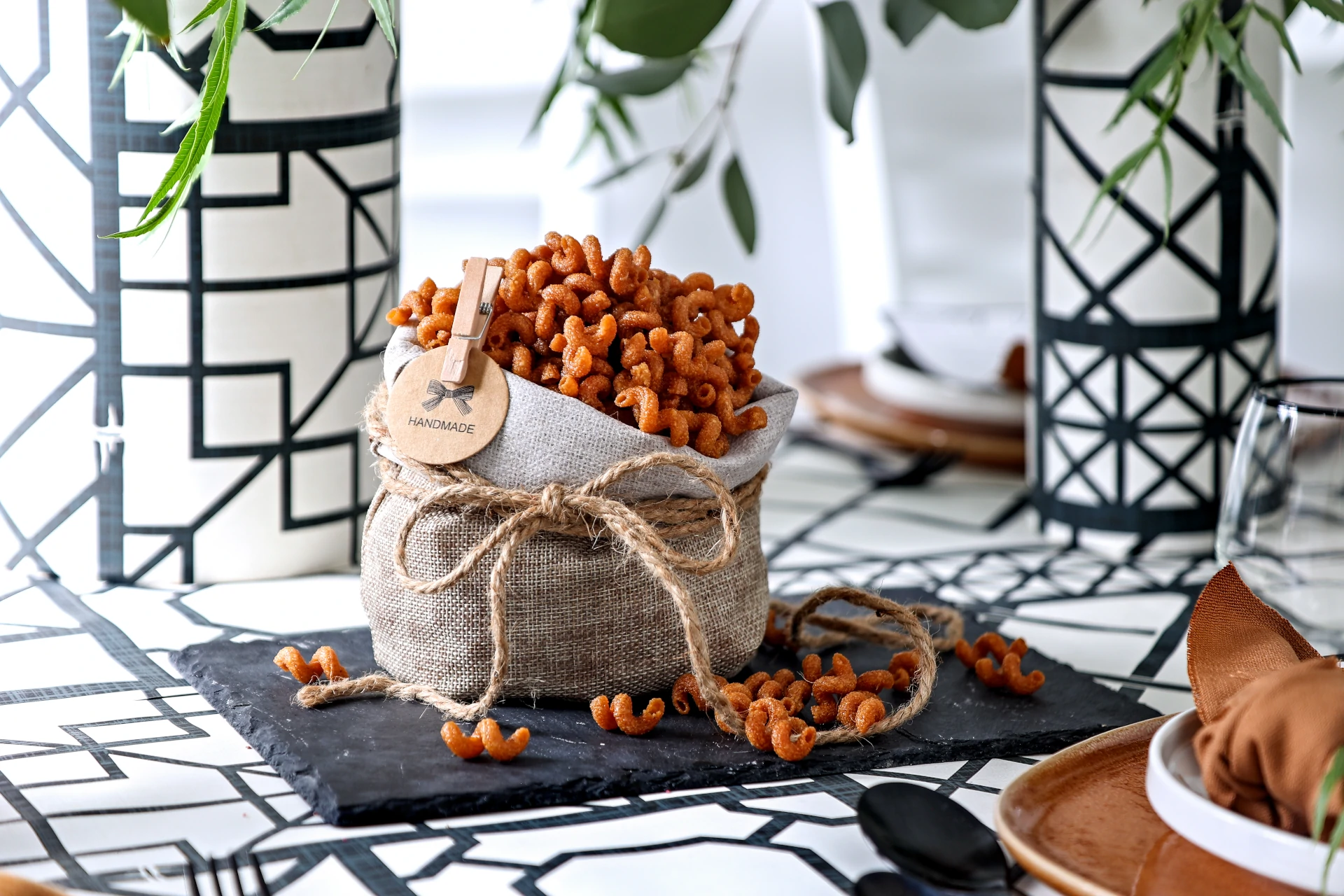
Bissli is actually fried pasta, and that’s why they are mostly the same shapes as pastas. Our take on it was that we wanted to create the flavors that the Osem R and D labs probably rejected, and because we spice it ourselves, we can go really crazy with the flavors. We’re not limited to the six familiar flavors from our childhood.
It’s important to understand how these flavors are built, in order to make them work. There are two ways to make the flavorings: One is with a pre-made spice mix, like shawarma, and the other one—and I know this is going to be controversial—is with using MSG. Quite frankly, when you’re eating Bissli, you’re eating MSG, and that is why it’s delicious. Lots of people have lots of feelings about MSG, but if we’re being honest, we’re eating MSG all day because many foods contain it; people somehow have an ethical problem with putting it into their food. Honestly, MSG is the heart of the Bissli flavor, and you can use different versions of it. Some people are more comfortable using the mushroom mix, and others will use the chicken soup mix.
You also need some acidity. Vinegar powder is great for that, but it’s nearly impossible to find in Israel, but you can also use citric acid and some regular table salt.
Once you have that, the sky’s the limit. You can put a bunch of different herbs in there, or you can do a cinnamon, baharat and sumac version, or you can do a masala chai.
1 kilo (2 and 1/4 pounds) pasta, such as Tuscanini (any shape, but fusilli, elbows, and bow ties work best)
Pereg Shawarma Spice or other seasoning (see headnote)
oil, such as Gefen Canola Oil, for frying


Cook pasta until al dente (firm but not hard). While it cooks, prepare the seasoning mix (see headnote) so it’s ready to go right after frying.
Rinse pasta well and dry thoroughly. I mentioned the drying, right? Air dry, towel dry, blow dry – doesn’t matter; just remember that nothing wet gets fried. You’ve been warned.
In a pot, heat one inch of oil over medium heat until it reaches 325 degrees Fahrenheit.
Fry pasta in batches, mixing constantly to make sure it remains submerged in the oil. It may clump, so do your best to break up the clumps; it takes some work. Remove when the pasta becomes crispy and dark brown. Immediately toss in seasoning.
Photo and Styling by Yossi and Malky Levine
How Would You
Rate this recipe?


When leaving comments on kosher.com we ask that you be respectful, appropriate, and stay on topic. Click here to read our full comment policy.
Kosher.com Commenting Guidelines
We love hearing from our community! Constructive feedback, tips, questions, and friendly engagement are encouraged.
By commenting on Kosher.com, you agree to follow these guidelines. Please note that comments are for community discussion only and should not be considered halachic guidance—always check with your own Rabbi or LOR.
1. Be Respectful
2. Keep It Appropriate
3. Protect Privacy
4. Stay On Topic
5. Moderation