
Please enter the email you’re using for this account.


 Parve
Parve Medium
 12 Servings
 Allergens
No Allergens specified
 35 Minutes
 Diets
Diets
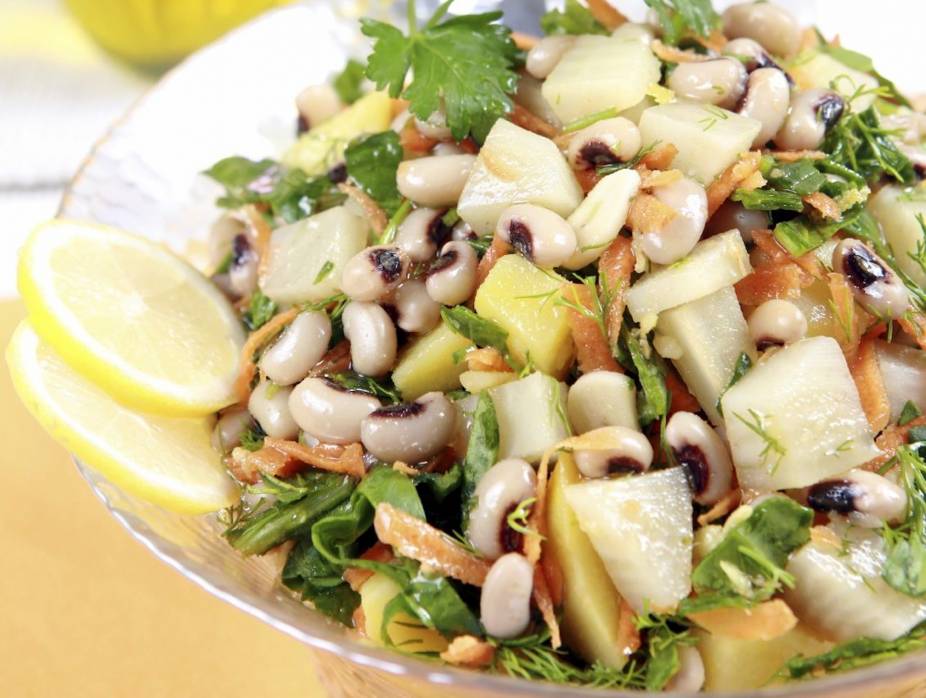
My favorite way to serve rubia as a siman heralds back to my Southern roots in this version of Texas caviar. There are many recipes for the Texas favorite, which got its name when the humble black-eyed pea made its way onto Houston’s Neiman Marcus menu in a salsa-style marinated salad. This winning variation gets its flavor boost from pineapple.
The recipe also calls for sweet onion. Sweet onion varieties such as Vidalia and Walla Walla onions are bred to be less pungent than the common yellow onion. A Spanish red onion will work just as well if can’t obtain the sweet yellow variety.
Check out our complete collection of Rosh Hashanah recipes for mains, sides, soups, desserts, and more inspiration for the holiday.
1 (14 and 1/2 ounce) can black beans or black-eyed peas, drained
1 cup pineapple, diced
1 sweet onion, diced
2 stalks celery, diced
4 red bell peppers, halved and seeded, or 1 (12-ounce) jar fire-roasted bell peppers, chopped
1/4 cup vegetable oil
1/4 cup Haddar Dijon Mustard
2 tablespoons Gefen Honey
1/2 teaspoon salt
1/4 teaspoon black pepper


In a mixing bowl, combine the beans, pineapple, onion, and celery.
If you are using fresh bell peppers: Preheat the broiler and place the oven rack in the top position. Line a large baking pan with foil. Place the peppers cut side down on the foil and broil until the skins are black, eight to 12 minutes.
Remove the roasted peppers from the oven. Wrap the peppers with the foil that lined the pan and set aside for 10 minutes. This will steam the peppers and allow the skin to slip off easily. Peel the skin from the peppers. Any skin that does not slip off may remain. Chop the peppers.
Add the roasted peppers to the bean mixture.
In a small bowl, whisk the oil, mustard, honey, salt, and pepper. Toss the dressing with the vegetables. Chill overnight.
By Renee Rousso Chernin. Reproduced from Cooking for the King, Rosh Hashanah edition.
How Would You
Rate this recipe?
Fast answers grounded in site content.


When leaving comments on kosher.com we ask that you be respectful, appropriate, and stay on topic. Click here to read our full comment policy.
Kosher.com Commenting Guidelines
We love hearing from our community! Constructive feedback, tips, questions, and friendly engagement are encouraged.
By commenting on Kosher.com, you agree to follow these guidelines. Please note that comments are for community discussion only and should not be considered halachic guidance—always check with your own Rabbi or LOR.
1. Be Respectful
2. Keep It Appropriate
3. Protect Privacy
4. Stay On Topic
5. Moderation