

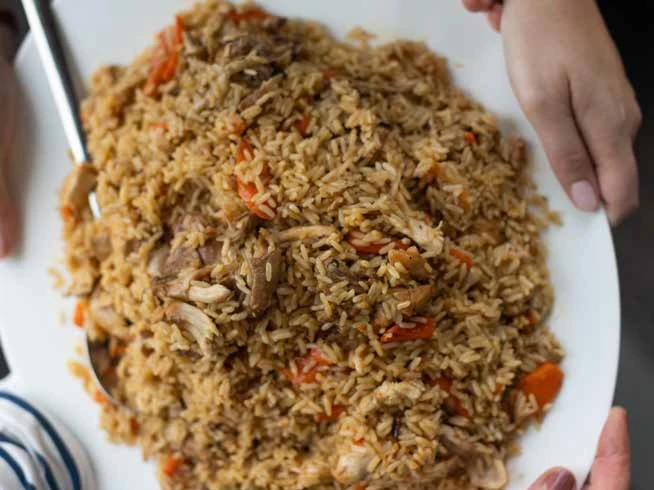
Peel and chop the onions. Peel and cut the carrots into thick strips. Cut the chicken into medium-size pieces. Rinse the rice thoroughly under running cold water until the water runs clear. Wash the garlic head, then remove the outer layer of skin but don’t peel the cloves.
Heat sunflower oil in a deep pot over medium heat. Add the onions and fry until golden, then add the chicken and continue frying until the chicken starts to brown, about five minutes.
Add the carrots and cook for four to five minutes, stirring constantly so they don’t stick to the pan.
Pour in enough water to cover the ingredients. Reduce the heat, add the cumin, and season with salt and pepper. Simmer for 40 to 50 minutes.
Layer the rice on top and pour in more water so it covers the rice by about three-fourths of an inch (two centimeters). Gently press the garlic head into the center of the rice. Bring to a rapid boil and boil until the water evaporates, then cover with a lid, reduce the heat to low, and cook for 25 to 30 minutes. Don’t stir during this time.
Remove from the heat and let the pilaf rest, covered, for 10 minutes. Mix everything thoroughly together and serve hot, garnished with the softened garlic cloves if desired.
Directions
About
Description:
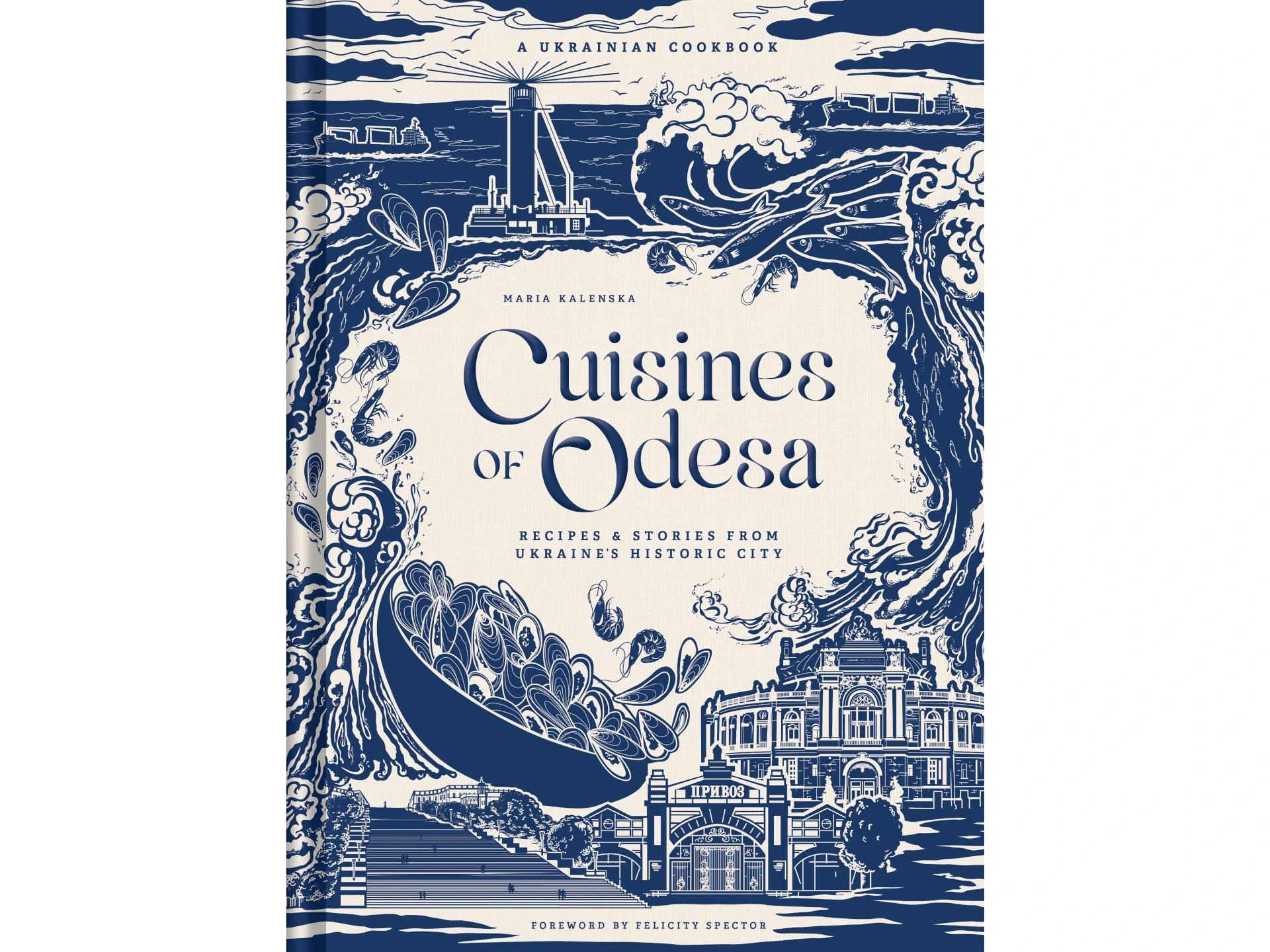
Reprinted with permission from Cuisines of Odesa: Recipes and Stories from Ukraine’s Historic City by Maria Kalenska © 2026. Photography by Elena Groza © 2026. Published by Weldon Owen, an imprint of Insight Editions. Purchase on Amazon.



Photos from Our Community
See how these recipes turned out in real kitchens. Photos from home cooks will appear here as they're shared.
Tell Us How It Went: Share Your Experience
Your review could help someone decide what's for dinner tonight. Log in to join the conversation.
Log in to join the discussion0 Comments
Do you want to rate this post?
Edit your rating
Choose a new star rating and save it.
Moderation
Report
Kosher Comments
Kosher Comments
Add a link
Posting comment
Your comment will be posted in a moment...